.jpg)
Gosaikunda Helicopter Tour Overview:
The Gosainkunda Helicopter Tour from Kathmandu is one of the fastest and most scenic ways to visit the sacred Gosainkunda Lake (4,380 m) in Langtang National Park. Located north of Kathmandu near the Tibetan border, this high-altitude alpine lake is an important pilgrimage site for both Hindus and Buddhists.
The tour is ideal for travelers with limited time, families, older visitors, or anyone who wants to experience the Himalayas without the physical challenge of trekking.
The journey begins with a scenic helicopter flight from Kathmandu, flying over terraced hills, dense forests, rivers, and traditional mountain villages. As the aircraft climbs higher, the landscape changes dramatically into rugged alpine terrain.
Passengers enjoy breathtaking aerial views of the Langtang, Ganesh Himal, and Manaslu mountain ranges, along with glaciers, high ridges, and remote valleys rarely seen from the ground. On clear days, the visibility is excellent, making this one of the most rewarding mountain flights in Nepal.
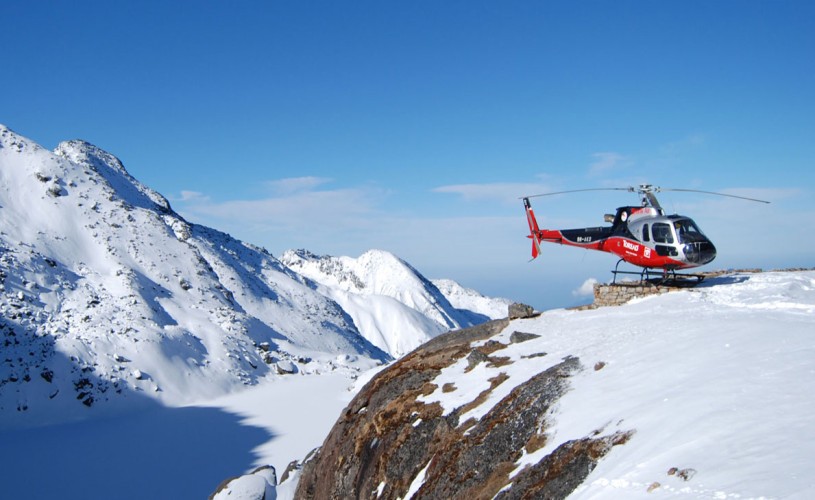
After landing near Gosainkunda Lake, visitors usually have time to walk around, take photographs, and experience the peaceful high-mountain environment. According to Hindu belief, the lake was created by Lord Shiva, which gives the site deep religious significance.
A small shrine near the lake attracts pilgrims who perform rituals and offer prayers. During the Janai Purnima festival in August, thousands of devotees travel here to bathe in the holy water, believing it purifies sins and brings blessings.
The Gosaikunda area contains many sacred alpine lakes, traditionally believed to number 108, including Bhairab Kunda, Saraswati Kunda, and Surya Kunda. From above, these lakes appear like shining jewels scattered across the rocky landscape.
This aerial perspective allows visitors to appreciate the scale, remoteness, and natural beauty of the Langtang region in a way that trekking alone cannot provide.
Unlike the classic Gosainkunda Trek, which typically takes 7 to 8 days and requires good physical fitness, the helicopter tour completes the entire experience in about 2 to 3 hours, including landing time.
This makes it a practical option for short-stay travelers, photographers, pilgrims, and those unable to hike at high altitude. It is also popular among visitors who want a luxury mountain experience in a single day.
Flights operate most of the year, with the best conditions in spring (March to May) and autumn (September to November), when skies are clear and mountain views are sharp. Winter flights are possible, but temperatures at the landing site can be extremely cold. During the monsoon season (June to August), cloud cover may cause delays or cancellations.
Overall, the Gosainkunda Helicopter Tour offers a rare combination of natural beauty, spiritual importance, and convenience, allowing visitors to stand beside one of Nepal’s most sacred Himalayan lakes and return to Kathmandu the same day with unforgettable memories.
Key Highlights of the Gosaikunda Helicopter Tour
Landing at Sacred Gosaikunda Lake: Spend approximately 30–60 minutes at the beautiful alpine lake, perfect for photography, quiet reflection, and religious rituals.
Fast and Convenient: Enjoy a quick round-trip flight from Kathmandu, typically 1–2 hours in total, with about 15–20 minutes of flying each way to reach the sacred lake.
Spectacular Aerial Views: Take in breathtaking views of Langtang National Park, lush forests, the Trishuli River, and snow-covered peaks such as Langtang Lirung, Ganesh Himal, and Dorje Lakpa.
Unique Himalayan Scenery: See the main lake surrounded by several smaller sacred lakes, including Saraswati Kunda and Bhairab Kunda.
Year-Round Experience: Witness frozen landscapes during the colder months (October to June) and vibrant green scenery during the warmer season.
Suitable for Everyone: Ideal for travelers of all ages and fitness levels who want to experience high-altitude Himalayan beauty without long and difficult trekking.
Cultural and Spiritual Insight: Learn about the religious importance of the lake and observe traditional Tamang villages in the surrounding region.
Best Season for the Gosaikunda Helicopter Tour
The best time for the Gosaikunda Helicopter Tour is during autumn (September to November) and spring (March to May). In these seasons, the weather in the Langtang region is usually clear and stable, providing excellent visibility and safe flying conditions. You can enjoy wide views of the Himalayan peaks, glaciers, and the sacred Gosaikunda Lake.
Autumn is especially popular because the skies are typically bright after the monsoon, offering sharp and uninterrupted mountain views. Spring is also beautiful, with rhododendron forests in bloom and pleasant temperatures. Winter (December to February) can offer clear views, but very cold temperatures and possible snowfall may affect flights. The monsoon season (June to August) is generally not recommended due to heavy rain, clouds, and poor visibility. For the safest flight and the best scenery, autumn and spring are the ideal times to visit.
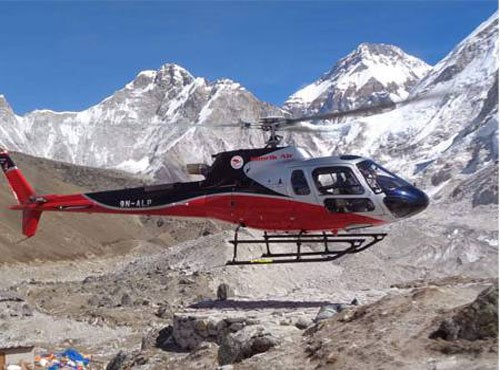
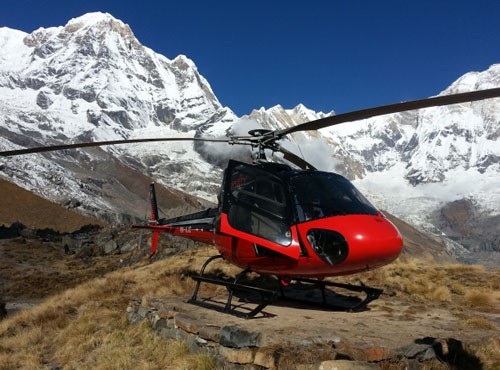
Helicopter Models Used for the Flight
9N-ANA
- Model: AS350 B3e (H125)
- Manufacturer: Airbus Helicopters, France
- Engine Type: Arriel 2D
- Passenger Capacity: 5 passengers + 1 pilot
- Maximum Takeoff Weight: 2,250 kg
- Maximum Operating Altitude: 23,000 ft
9N-ALA
- Model: AS350 B3e (H125)
- Manufacturer: Airbus Helicopters, France
- Engine Type: Arriel 2D
- Passenger Capacity: 5 passengers + 1 pilot
- Maximum Takeoff Weight: 2,250 kg
- Maximum Operating Altitude: 23,000 ft
9N-AJD
- Model: AS350 FX II
- Manufacturer: Airbus Helicopters, France
- Engine Type: LTS-101-700D2
- Passenger Capacity: 5 passengers + 1 pilot
- Maximum Takeoff Weight: 2,250 kg
- Maximum Operating Altitude: 16,000 ft
9N-AFQ
- Model: AS350 FX II
- Manufacturer: Airbus Helicopters, France
- Engine Type: LTS-101-700D2
- Passenger Capacity: 5 passengers + 1 pilot
- Maximum Takeoff Weight: 2,250 kg
- Maximum Operating Altitude: 16,000 ft
Essential Safety Measures for the Gosaikunda Helicopter Tour
- Do not rush when entering or exiting the helicopter
- Wait for the pilot’s instructions, especially during boarding and landing
- Follow all safety briefings given by your guide and pilot
- Always fasten your seat belt during the flight
- Never put your hands, head, or objects outside the window