Spectacular sunrise view from Ghorepani and Poon Hill
Traditional Gurung villages and local culture along the trekking route
Visit Machhapuchare (Fishtail) Base Camp.
Enjoy breathtaking views from Annapurna Base Camp
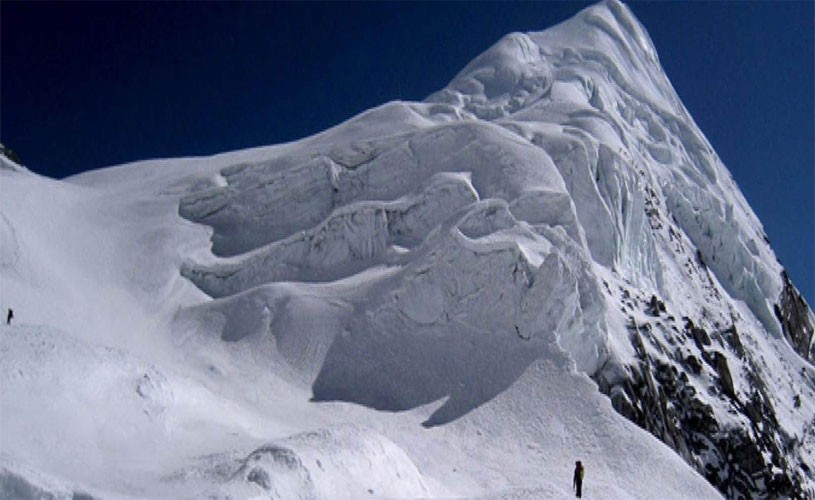
Summit Tent Peak (Tharpu Chuli) with stunning views of the Annapurna Sanctuary
Need Help? Call Us! +977 9851025658
Annapurna Base Camp trek with Tent Peak Climbing - 16 Days
Trip Facts
- Duration 16 Days
- Difficulty Level Strenuous plus
- Destination Nepal
- Transportation Private Vehicle, Tourist Bus/ Jeep & Domestic flight
- Activity Trekking and Peak Climbing
- Best Season March-May & mid-Sept - December
- Group Size Minimum 2 & Maximum -14 people
- Trip Start/End Kathmandu
- Max Altitude 5,695m/18,685ft
Highlights
Annapurna Base Camp Trek with Tent Peak Climbing
Annapurna Base Camp and Tent Peak climbing is a rewarding Himalayan adventure that combines one of Nepal’s most famous treks with an exciting trekking peak ascent.
The journey takes trekkers into the heart of the Annapurna Sanctuary, ending at Annapurna Base Camp (4,130 m) and the summit of Tent Peak (5,663 m), locally known as Tharpu Chuli. This route is popular among trekkers who want to experience both high-altitude trekking and their first real Himalayan climb.
The expedition begins along the well-known Annapurna Base Camp Trek route, passing through beautiful mountain landscapes and traditional villages in the Annapurna region. The trail leads through terraced fields, bamboo forests, and colorful rhododendron forests, especially during the spring season.
Trekkers walk through villages such as Chhomrong and Deurali, where they experience the culture and daily life of local Gurung communities. Along the way there are views of waterfalls, deep river valleys, and gradually rising snow-covered peaks. This approach trek is important because it allows the body to acclimatize gradually to higher altitude, preparing climbers for the Tent Peak ascent.
Reaching Annapurna Base Camp, surrounded by a natural amphitheater of high mountains, is one of the highlights of the journey. From here, trekkers enjoy close views of Annapurna I (8,091 m), Hiunchuli, Machapuchare (Fishtail), and Annapurna South. After spending time acclimatizing at the base camp, the route continues toward Tent Peak Base Camp (around 4,450 m) and then to High Camp, which sits below the summit ridge. These camps allow climbers to rest, prepare climbing equipment, and adjust to the thinner air before the summit push.
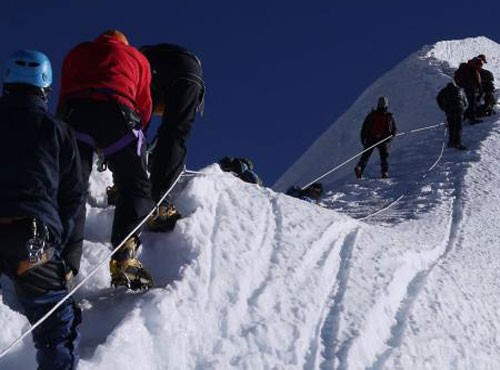
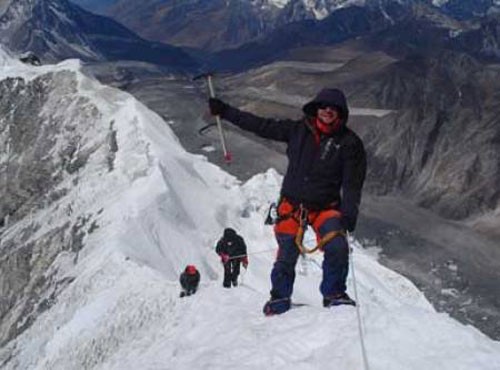
Summit day on Tent Peak is the most exciting part of the expedition. Climbers usually start early in the morning and ascend snow and glacier slopes using basic alpine equipment such as crampons, ice axes, and ropes. The climb follows the North-West Ridge, which offers dramatic views of the surrounding glaciers and the wide Annapurna Sanctuary below.
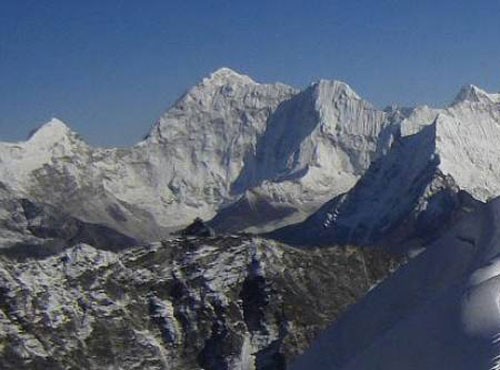
From the summit of Tent Peak, climbers are rewarded with spectacular panoramic views of the Annapurna and Dhaulagiri mountain ranges, including close perspectives of Annapurna I, Annapurna South, Hiunchuli, and other Himalayan peaks.
This adventure is ideal for trekkers who want to take their experience beyond trekking and into beginner mountaineering. Tent Peak is often recommended as a training peak before attempting higher Himalayan mountains, such as Island Peak or Mera Peak. Many climbers also combine this journey with the classic Annapurna Base Camp Trek, which remains one of the most scenic trekking routes in Nepal.
For those interested in more trekking peaks, Nepal also offers several beginner-friendly climbs such as Yala Peak Climbing, Lobuche Peak Climbing, and Pisang Peak Climbing, which provide excellent preparation for higher Himalayan expeditions.
Itinerary
Upon your arrival at Tribhuvan International Airport in Kathmandu, a representative from Adventure Club Trek will welcome you and assist with your transfer. After completing the arrival formalities at the airport, you will be driven to your hotel in a comfortable private vehicle. Once you have checked in and had time to rest after your journey, you will meet your trekking or climbing leader during a welcome dinner in the evening. During this time, you will receive a short trip briefing and orientation about the upcoming adventure. Overnight stay in Kathmandu.
We depart early in the morning for Pokhara on a tourist bus, following a scenic route along the Trishuli River. The drive offers views of rivers, hills, and rural villages along the way. Pokhara is often called the “Lake City” of Nepal because it is home to several beautiful lakes and offers stunning views of the Annapurna and Machapuchare (Fishtail) mountains. In the late afternoon, there is time to explore the lakeside area and enjoy a relaxing boat ride on the calm waters of Phewa Lake. Overnight stay in Pokhara.
After breakfast, we'll ride a Jeep to Nayapul village and Birethanti. Then, we'll drive through farm villages and beautiful waterfalls until we reach Hile and Tikhedhunga. Our journey goes uphill through the mountain road by Jeep to Ulleri Village, where you can enjoy views of Annapurna and Machhapuchhre Mountain (Fishtail). Once we reach Ulleri village, we'll walk through Bhanthanti village and enter a beautiful forest filled with tall rhododendrons, magnolia, oak, pine, and fir trees. The trek gradually goes uphill, leading us to Ghorepani village, where we'll stay overnight. Ghorepani, situated below the viewpoint of Poon Hill, is home to the Poon tribe of the Magar community. Overnight at Ghorepani.
After breakfast, we set off to Poon Hill (3210 m/10531 ft) early in the morning, a steep uphill walk for about 40 minutes. Reaching the top, we get a stunning view of the sunrise over the Himalayas, which include the Mt. Annapurna, Fishtail, Nilgiri, Himchuli, and Dhaulagiri summits. Then we retrace our steps down to Ghorepani, have breakfast, and pack the stuff. The journey further needs to be clarified with uphill and downhill routes. We move through the meadows and woods to Deurali. Descending to the stream, we follow it till Banthanti, where we stop for lunch. The trail further after the lunch stop includes a steep descent and equally ascends to reach Tadapani. Overnight at Tadapani.
Today the trail follows stone steps and forest paths as you descend through beautiful woodland. Along the route, you pass mani walls, prayer flags, and traditional Gurung villages while enjoying the peaceful mountain surroundings. After reaching the river valley, you cross suspension bridges before gradually climbing toward Chhomrong. This charming village offers impressive views of several high Himalayan peaks. Overnight stay in Chhomrong.
The trail begins with a steep descent down a series of stairs leading us to the Chhomrong Khola River. We will cross the suspension bridge at 1,900m before climbing again on a set stairway towards Sinewa at 2,340m. We will stop for tea to refresh and take in the scenery. The trail will continue with a gradual climb, taking us to Khuldighar. After navigating through this varied landscape of bamboo forest, we will reach Bamboo at 2,300 m and have a delicious lunch. We bid farewell to the dense forest and start a steep descent, leading you to Dovan at 2,505m. The night will be spent in a cozy lodge where we can enjoy the peaceful atmosphere of the mountains. Overnight at Dovan.
As you begin the hike, you will be amazed by the vibrant rhododendrons and bamboo trees that are in full bloom. We walk through a damp, cold bamboo forest. The trail is steep at times. After reaching the Himalayan hotel, the forest opens, and we can enjoy the stunning views of the glacial rivers below. The climb is steep through a much drier forest to reach Hinku Cave. Our trail descends to a river before ascending to Deurali. We can see the surrounding mountains and Mt. Dhaulagiri. We can see that the vegetation is sparse, allowing us to enjoy the magical views of the valley below the river and the cliffs with waterfalls. Overnight in Deurali.
Today’s trek takes about 5 hours and leads us past Machhapuchare Base Camp (MBC). This base camp is not used for climbing the mountain, as Machhapuchhre (Fishtail) is considered sacred and climbing it is not permitted. Because the area is surrounded by towering peaks, it is known as the Annapurna Sanctuary. From Machhapuchare Base Camp, it takes about 2 more hours of trekking to reach Annapurna Base Camp (4,130 m). From here, you can enjoy breathtaking and unobstructed views of the surrounding Himalayan mountains.
Today’s trek takes about 4 hours, with a steady and relaxed pace that helps with proper acclimatization before climbing Tent Peak. Along the way, your guide will provide important information and instructions about the upcoming climb and the plan for the next day. From today onward, accommodation will be in tented camps for the next two nights. Our professional camp staff and chef will prepare fresh meals to support the team during the climbing phase of the expedition.
Today is reserved for acclimatization and preparation at High Camp (around 5,000 m / 16,404 ft). To help the body adjust to the thinner air, we take a short walk around the camp area and spend time resting and organizing climbing equipment. The guide will review the plan and safety procedures for the next morning’s summit attempt, ensuring everyone is ready for the adventure ahead.
The summit attempt begins very early in the morning, usually around 2:00–3:00 am. From High Camp, the climb starts with about two hours of walking over rocky terrain, followed by approximately one hour across a flat snowfield. The route then becomes steeper, where climbers ascend a 100-meter snow slope of around 70 degrees using fixed ropes for safety. After this section, the trail continues along a gentler snow ridge for about 30 minutes before reaching the summit of Tent Peak.
From the top, climbers can enjoy spectacular views of the Annapurna range, Hiunchuli, Machapuchare, and surrounding Himalayan peaks. After spending some time at the summit, the team carefully descends along the same route back to Base Camp. This round trip usually takes 8–10 hours in total. Overnight stay at Base Camp.
Today we retrace our steps along the same trail, descending for about 6 hours through the valley. The path gradually leads down toward the Modi Khola river, passing alpine landscapes and mountain views before reaching the small settlement of Deurali. Overnight stay in Deurali.
Today we follow the same trail for about 6–7 hours until we reach Chhomrong village. After passing Khuldighar, the route goes by a small experimental sheep farm before continuing through beautiful rhododendron and bamboo forests. The trail gradually descends and climbs along the valley, offering pleasant forest scenery before arriving at Chhomrong. Overnight stay in Chhomrong.
After breakfast, the trek descends from Chhomrong through forest trails toward Jhinu Danda, a small village known for its natural hot springs near the Modi Khola River. From Jhinu Danda, the trail continues down to Kimrong Khola, crossing suspension bridges and passing through beautiful hillside landscapes. From Kimrong Khola, we meet our vehicle and drive back to Pokhara, enjoying scenic views of hills, rivers, and rural villages along the way. Overnight stay in Pokhara.
Today, you will take an afternoon flight, allowing you some time to do last-minute shopping or relax in Pokhara as you take an afternoon flight to Kathmandu. In Kathmandu, you will be escorted to the hotel. You will have leisure time for shopping or exploring any landmarks that have been missed during your first day in Kathmandu. The Adventure Club Trek will host a farewell dinner to celebrate the successful completion of our journey in the evening.
Our trip ends here. A representative from the Adventure Club Trek will accompany you and see you off at Tribhuvan International Airport a few hours before the scheduled flight to your home.
Note: If you still have a few days after the trekking schedule, you might be interested in experiencing other adventurous activities like jungle safari, rafting, bungee jumping, and paragliding. You may contact the Adventure Club Trek for the arrangement.
Cost Details
Price Includes
Accommodation
- Twin-sharing or double room accommodation in a 3-star hotel in Kathmandu and Pokhara with breakfast.
- Twin-sharing guesthouse accommodation during the trek
- Tented camp accommodation at Tent Peak Base Camp and High Camp
- • Camping Equipment: tents, kitchen equipment, dining tables, chairs, and toilet tents.
- All tents provided are windproof and waterproof twin-sharing tents suitable for high-altitude conditions.
Meals and Drinking Water
- Three standard meals per day (breakfast, lunch, and dinner) during the trek and climbing period.
- Seasonal fresh fruits served during the trek.
- Water purification tablets.
- Welcome and farewell dinner in Kathmandu
Transportation
- All airport transfers (international and domestic) by private tourist vehicle.
- Tourist bus transportation between Kathmandu and Pokhara.
- One-way domestic flight from Pokhara to Kathmandu
- Private 4WD vehicle from Pokhara to Ullieri and from Kimrong Khola to Pokhara.
Guide and Trekking Staff
- Experienced, government-licensed English-speaking trekking guide, trained in first aid and high-altitude safety.
- Porters for luggage support during the trek (1 porter for every 2 trekkers).
- Professional climbing Sherpa guide from Base Camp to the summit and back.
- All staff expenses, including wages, accommodation, meals, insurance, and equipment.
Permits and Entry Fees
- Annapurna Conservation Area Permit (ACAP)
- TIMS (Trekkers’ Information Management System) card
- Tent Peak (Tharpu Chuli) climbing permit
- Garbage deposit fee and environmental charges
Equipment
Group climbing equipment, including climbing ropes, ice screws, snow bars, and ice hammers, is required for the expedition.
Benefits and Additional Services
- Company duffel bag/kit bag, trekking map,
- Comprehensive first aid kit, including an oximeter to monitor oxygen levels during the trek.
- Trip completion certificate at the end of the expedition.
Administration and Taxes
All government and local taxes related to the trip.
Price Excludes
- Nepal visa (USD 30 for 15 days, USD 50 for 30 days, and USD 125 for 90 days)
- Lunch and evening meals in Kathmandu and Pokhara.
- International airfares/flights (fares and flights can be arranged upon request)
- Personal expenses (alcoholic drinks, bottled water, cold drinks)
- Travel Insurance
- Personal trekking equipment
- Tips for guide, porters, and drivers (tipping is expected, but it is not mandatory)
Date & Prices
| Start DateStart: TuesdayOctober 20, 2026 | End DateEnd: WednesdayNovember 04, 2026 | StatusStatusAvailable | PricePriceUS $0 | |
| Start DateStart: FridayOctober 23, 2026 | End DateEnd: SaturdayNovember 07, 2026 | StatusStatusAvailable | PricePriceUS $0 | |
| Start DateStart: MondayOctober 26, 2026 | End DateEnd: TuesdayNovember 10, 2026 | StatusStatusAvailable | PricePriceUS $0 | |
| Start DateStart: ThursdayOctober 29, 2026 | End DateEnd: FridayNovember 13, 2026 | StatusStatusAvailable | PricePriceUS $0 | |
| Start DateStart: SaturdayOctober 31, 2026 | End DateEnd: SundayNovember 15, 2026 | StatusStatusAvailable | PricePriceUS $0 |
Useful Info
Acclimatization And High Altitude Sickness
The acclimatization planned during the trip helps trekkers adapt to the environment with less oxygen. Our body needs time to adjust to higher altitudes. Rushing to the higher elevation without acclimatization may result in acute mountain sickness (AMS), which could be fatal. The trekkers may suffer from AMS above 2,400m/7,875ft as the amount of oxygen becomes less and less with the increase in elevation.
We can categorize AMS into three categories with its symptoms. The trekker suffering from normal AMS feels giddy, gets a headache, has Nausea, is out of breath, and is suggested not to worry as it disappears after the body gets used to less oxygen. Likewise, trekkers suffering from mild AMS show symptoms of dizziness, muscular pain, insomnia, headache, vomiting, loss of appetite, rapid heartbeat, and shortness of breath. Mild AMS can be treated with anti-headache medicines. A person suffering from severe AMS shows heightened symptoms, including shortness of breath, even while resting. The trekker with severe symptoms can barely walk, and fluids may start building up in the lungs. The trekker having severe AMS has to be taken to a lower altitude immediately.
Advanced cases of AMS
If AMS is not treated in time, it can be life-threatening and lead to edema, a condition in which fluid is accumulated in the body's tissues. Following are the two serious altitude sicknesses caused at high altitudes.
High Altitude Cerebral Edema (HACE)
In HACE, the brain gets swollen, which can lead to coma and even death. Its symptoms are paralysis on one side of the body, bladder dysfunction, fatigue, bowel dysfunction, loss of coordination, and confusion. Descend to a lower altitude as soon as possible to prevent the worsening of the condition.
High Altitude Pulmonary Edema (HAPE)
Fluid is accumulated in the lungs, which also increases the capillary pressure. Its symptoms include severe shortness of breath at rest, dry cough that later leads to producing frothy pink sputum, and fatigue. Important Note: Severe cases of AMS are rare. All our Adventure Club Trek guides are aware of the symptoms of AMS and can handle it with care. We prioritize acclimatization, talk about the use of Diamox beforehand, and counsel all our trekkers on the risk and preventive factors before and during the trip. Your safety is our main concern.
First-Aid Kit
Our guides and porters are equipped with a basic first-aid kit during regular treks. A comprehensive first-aid kit is compulsory for expeditions that take on isolated and off-the-beaten trekking paths; the same goes for climbing expeditions.
- A bandage in case of sprains.
- Plasters/ Band-aids and antiseptic ointments for simple cuts
- Iodine or water filter (optional) instead of buying bottled mineral water
- Moleskin/Second skin in case of blisters.
- Aspirin/Paracetamol -painkiller.
- Oral rehydration salts-Nava Jeevan or Jeevan Jal (orange-flavored ORS)
- The broad-spectrum antibiotic (norfloxacin or ciprofloxacin).
- Anti-diarrhea medication (antibiotic).
- Diarrheal stopper (Imodium - optional).
- Diamox 250/500mg (for altitude sickness).
- Gel hand cleaner/sanitizer.
Note: We can add medical supplies per the trekkers' special needs to the first-aid kit given above.
Equipment And Packing List
We recommend that you bring the items to the list below. If your trek is longer or shorter than that, appropriate adjustments can be made to reflect the specific requirements, season, and length of the trip. The items marked with an asterisk (Adventure Club Trek will provide *) at no additional cost. You are welcome to use such articles if you already have them and prefer your own. Many trekking items can be bought cheaply in the Thamel neighborhood of Kathmandu; quality will vary, with the imported items from China often being of higher quality. There are also several high-end shops in Kathmandu that carry well-known brands. Since our porters will carry your pack, please remember the weight limit is 20kg (40 lbs since there is nothing there but some prayer flags. Also, please note that you still need to send me a gear list.
* The Adventure Club Trek will lend each trekker a set of down Jackets, sleeping bags,s and duffle bags.
* Our main guide, trained in wilderness first aid, will carry a comprehensive medical kit.
Important Documents And Items
- Valid passport, two extra passport-size photos, and airline tickets.
- Dollars, pounds, or Euros in cash for purchasing a Nepali visa at Kathmandu airport, for paying for restaurants and hotels, for gratuities, snacks, and for purchasing your drinks and gifts.
- Credit cards, Bank/ATM/Cash machine cards for withdrawing funds from cash machines (bring a photocopy of your cards), traveler's checks, etc.
CLIMBING
- Ice axe
- Crampons
- Harness
- Screw gate
- Descended abseil device
- Prussic loops
- Plastic mountaineering boot
HEAD
- Bandana or headscarf, also useful in dusty conditions
- Warm hat that covers your ears (wool or synthetic)
- Headlamp with extra batteries and bulbs
- Sunglasses with UV protection
- Prescription sunglasses (if required)
UPPER BODY
- Polypropylene shirts (1 half sleeve and two long sleeves)
- Light and expedition-weight thermal tops
- Fleece wind-stopper jacket or pullover
- Waterproof (preferably breathable fabric) shell jacket
- Down vest and jacket *
- Gore-Tex jacket with hood, waterproof and breathable
LOWER BODY
- non-cotton underwear briefs
- One pair of Hiking shorts
- One pair of hiking trousers
- One pair of lightweight thermal bottoms (seasonal)
- One pair of fleece or woolen trousers
- One pair of waterproof shell pants, breathable fabric
FEET
- Two pairs of thin, lightweight inner socks
- Two pairs of heavy poly or wool socks
- One pair of Hiking boots with spare laces (sturdy soles, water-resistant, ankle support, "broken-in")
- One pair of trainers or running shoes and sandals
- Cotton socks (optional)
- Gaiters (winter only), optional, "low" ankle high version
HANDS
- Pair of lightweight poly-liner gloves.
- One pair of lightweight wool or fleece gloves
- One pair of mittens consists of 1 Gore-Tex over mitt matched with a hot polar-fleece mitt liner (seasonal)
TOILETRIES
- One medium-sized quick-drying towel
- Toothbrush/paste (preferably biodegradable)
- Multipurpose soap (preferably biodegradable)
- Deodorants
- Nail clippers
- Face and body moisturizer
- Female hygiene products
- Small mirror
- Personal Hygiene
- Wet wipes (baby wipes)
- Tissue /toilet roll
- Anti-bacterial handwash
SLEEPING
- One sleeping bag (good to -10 degrees C or 14 degrees F)*
- Fleece sleeping bag liner (optional)
- Rucksack and Travel Bags
- Medium rucksack (50-70 liters/3000-4500 cubic inches, can be used for an airplane carryon)
- large duffel bag *
- A small daypack/backpack for carrying your valuables should have good shoulder padding.
- Small padlocks for duffel-kit bags
- Two large waterproof rucksack covers (optional)
Medical
- Small, personal first-aid kit. (Simple and light)
- Aspirin, first-aid tape, and plasters (Band-Aids)
- Anti-diarrhea pills
- Anti-headache pills
- Cough and cold medicine
- Anti-altitude sickness pills: Diamox or Acetylpolyamine
- Stomach antibiotic: Ciprofloxacin, etc. Do not bring sleeping pills, as they are respiratory depressants.
- Water purification tablets or the water filter
- Extra pair of prescription glasses, contact lens supplies
- Extras/Luxuries
- Reading book
- Trail map/guidebook
- Journal and pen
- Binoculars (optional)
- Voltage converter (from 220 to 110)
- Plug adapter (2 round pegs to 2 flat pegs)
Visa And Entry Procedure
Everyone needs a visa to enter Nepal except Indian nationals. Citizens of the SAARC nations like Pakistan, Bangladesh, and Bhutan do not require visas for 30 days. Fortunately, getting a Nepal visa is an easy process. Tourist visas are issued on arrival at the international airport and official overland entry points. However, travelers from Afghanistan, Iraq, Cameroon, Ghana, Somalia, Swaziland, Senegal, Zimbabwe, Nigeria, Ethiopia, and Liberia are not issued visas on arrival. After arriving at the Tribhuvan International Airport in Kathmandu, you will find electronic kiosks to assist with your visa processing. After taking the completed form and paying the visa fee, you must stay in the long immigration queue for your visa on arrival.
Visitors can now apply for an online visa within 15 days of their arrival date in Nepal. For this, you will need your Nepal hotel address and a digital passport-sized photo to be uploaded to the online application. After submitting the form online, you need to print out the confirmation page, which has to be furnished at the immigration section in Kathmandu airport, along with your passport and the required visa fee. You can apply for your online Nepal visa here.
Tourists can also apply for a Nepali visa at the local Nepali Embassy or Consulate in their respective countries. Or, they can even mail their visa application to the office near their location, but well ahead of time to allow sufficient processing time. Nepal visa information for all categories of travelers and their correspondence cost is very handy, so for more information and contact details of the Nepali Embassies and Consulate worldwide, you can click here.
Whichever way you enter Nepal, you will be given a 15/30/90-day visa per your requirement. The general Nepal tourist visa fee on arrival for multiple entries is:
15 days – US$30, 30 days – US$50, and 90days – US$125
Tourist visas can be extended for 150 days a year, and these extensions are granted only at the department of immigration offices in Pokhara and Kathmandu. For more information on Nepal visas, visit our visa information page.
Our Trekking Guides/Leaders
Here at Adventure Club, our staff is like family. We only use locals to support their communities, and we train our staff rigorously to be the best they can be – for you!
- Full first-aid training
- Guide Training (trekking)
- English and other common languages (as requested)
- Village and land Conservation
- Mountaineering (for specialty expeditions or climbing treks)
All our guides are carefully trained for leadership, as good leadership is vital for your tour to be enjoyable, safe, and successful. Most of our guides grew up in Sherpa or other mountainous parts of Nepal. Their pride in their region shows itself in the way they lead treks and interface with you.
Porters Care
On any team, courtesy and respect are fundamental for an enjoyable and worthwhile experience. Our porters are an essential, integral part of each trekking team, and as such, they are well-treated and well-paid. After your trek, you will find they fully earned gratitude and respect. We expect all trekkers to keep the weight of their baggage under 22kgs/40lbs. Adventure Club Trek maintains a full commitment to the rights of our porters, providing them with appropriate clothing, gear, and lodging. In case of serious accident or sickness, they receive the same care as anyone else employed on the trekking team, even including evacuation by helicopter at our expense if appropriate. We fully support the IPPG (International Porter Protection Group), which strives to maintain and improve our porter's working conditions.
Experience Required
The Pisang Peak and Annapurna circuit route is the longest in this region and is a complete circle of the Annapurna massif. Comparatively, it is considered harder and longer in duration than the Annapurna Base Camp Trek. It is because hikers will be walking across the high-altitude Thorong La Pass at 5,416m (17,764ft.). Besides the altitude, the steep climbs, long distances, and pared-down amenities make this trek hard. The route usually remains closed during the winter season due to the heavy snow accumulation on the trails. As it is a long trek, you need to be in the great shape of physical fitness so that you can walk for at least 5 to 7 hours each day. Even beginners can do this trek if they train themselves at least three months before. Cycling, swimming, acrobatics, hiking, jogging, and cardiovascular exercises are ways to train your body for a successful journey in the Himalayas.
Best Time to Travel
Autumn (Sept -Nov) and Spring (March-May) are the best seasons for the Annapurna Base Camp. The weather is sunny and warm, with outstanding views. Trekking in Summer or Monsoon (July to Aug) will be affected by rain, but a summer trek could be a boon for a keen botanist.
Travel Insurance
To be adequately protected in terms of insurance, you will need specialist travel insurance for participation in hazardous activities. A travel insurance policy that covers helicopter evacuation, trip cancellation, injury, death, lost baggage, theft, liability, medical treatment, and expenses is strongly recommended. Ensure the insurance covers all your activities during your Nepal stay, such as trekking and climbing. If you are injured and unable to travel, you can ask for a rescue helicopter from a remote area only if you have definite proof that you can pay for it. Adventure Club Trek has an agreement in Kathmandu that guarantees payment for helicopter evacuations. They pay a cash deposit to the helicopter operator and collect your money once you have been rescued. Be sure your policy specifically covers mountaineering or alpinism, or you may need help settling a claim.
Electricity, WIFI, And Battery Recharge
During the trek, electricity is available at all the teahouses where you will spend the night. You can recharge your phones, laptop, or iPads from micro-hydropower and solar panels by paying a nominal charge. Regarding Wi-Fi, there are no free hotspots along the trekking trail, so we do not encourage carrying your laptop. Some teahouses offer paid Wi-Fi services hourly but don't expect high-speed connectivity on the remote trails.
Communication
On the Annapurna Circuit Trek in Nepal, the internet service will be available at lodges with some extra service charge. You can contact your family and friends from the guesthouses, but as we reach higher altitudes, the communication will be through the phone for safety purposes. We communicate with all our valuable clients through the team leader at least once daily to ensure you are fine and enjoying the trip. The Adventure Club Trek office in Kathmandu will constantly be in touch with you for the help you may need during the trek. Depending on your network, there could be a poor signal to the network before the high altitude. Upon your request, we can provide you with a separate local sim card to better the network. Many places have WIFI service available at an extra cost.
Group Size And Team Composition
We always form a small group of like-minded people to give them a wonderful and perceptive travel experience. It provides opportunities to interact and share with each other in a fun-filled environment when out in the wilderness. Generally, our travel group comprises a maximum of 14 members. We need at least two participants to run our fixed departure dates. For private trips, the number of group members does not apply. We always strive to form a team, ensuring members are comfortable with one another.
Tipping
Tipping is optional in Nepal as most services include a service charge. However, if you want to express gratitude, you are free to tip drivers and hotel staff. People usually welcome such generosity. When tipping your porters or trekking leaders, use your discretion as per the quality of the services. Tip money does not form a part of our employees' wages. However, you can use tipping to show appreciation for excellent service at the end of the trip.
Ask a Question
