Nepal, Bhutan, and Tibet Tour 15 Days

Trip Facts

  • Duration 15 Days
  • Difficulty Level Moderate
  • Destination Nepal
  • Transportation Private Comfortable Transportation
  • Activity Cultural and Historical Tours
  • Best Season Feb - May and Sept- Dec
  • Group Size Min 2, Max 14 People
  • Trip Start/End Kathmandu, Nepal/Lhasa, Tibet
  • Max Altitude 3,660'/12,007ft

Highlights

  • Explore the Hindu and Buddhist sites in Kathmandu- Pashupathinath, Buddhanath, and Swayambhunath Stupa
  • The historical palaces- Kathmandu Durbar Square, Patan Durbar Square, and Bhaktapur Durbar Square
  • Explore the cultural wonders of Bhutan, which is known as the Last Shangri La
  • Most famous monastery- Tiger's Nest (Taktsang Monastery)
  • Second oldest and biggest monastery- Punakha Dzong
  • Gangtey Gompa and valley along with abundant caves for the monks
  • Tashichho Dzong, Memorial Chhorten and National Library in Thimphu
  • Lhasa- explore the globally renowned Potala palace, historical Sera monastery, and Norbulingka palace
  • Explore the Drepung Monastery, Jokhang temple,  and Barkhor Street local market
  • Get the cultural delights of the sacred and spiritual Tibetan highland

Nepal, Bhutan, and Tibet Tour  Overview

Nepal, Bhutan, and Tibet Tour – 15 Days is an ideal package for travelers who are looking forward to a cross-country tour including Nepal, Tibet, and Bhutan. These are culturally amazing with ambient arts and architectural wonders along with naturally remarkable destinations. Mainly the tour covers the medieval town of Kathmandu and Bhaktapur of Nepal, the roof of the world- Lhasa and its surroundings along with the cultural wonders around Paro and Thimphu of Bhutan.

Exploring the Hindu and Buddhist cultural sites of the Kathmandu valley, Nepal, Bhutan, and Tibet Tour – 15 Days begin. The world-renowned Hindu pilgrimage destination Pashupathinath, one of the biggest stupas of Buddhanath, and the impressive Swayambhunath Stupa are major highlights of the sightseeing tour in Kathmandu valley. The itinerary also allows visiting the ancient tows of Patan and Bhaktapur which were once separate estates in the history of Nepal. They preserve the traditional wooden and stone sculptures, pagoda shrines, and historical palaces.

Flying to Bhutan, you get the magical delights of the country where happiness lies during the Nepal, Bhutan, and Tibet tours. Paro, Punakha, and Thimphu are the places where you roam around and witness the historical and cultural sites. The impressive Taktsang Monastery (Tiger's Nest, located on the cliffside) is one of the major sites. The Tassicho Dzong,Memorial chhortens in Thimphu along with the Punakha Dzong in Punakha offers a unique experience of exploring the cultural vistas in Bhutan.

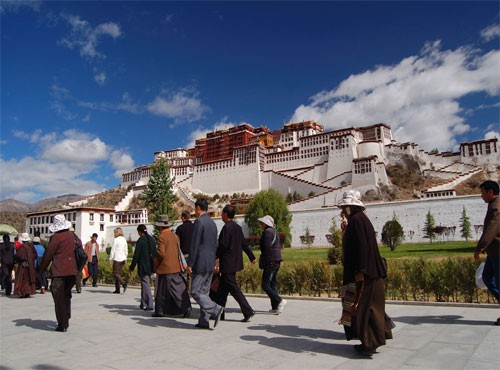
A couple of days of sightseeing in Lhasa further widen the idea about the cultural prosperity of the Tibetan highland. As it has been located above 3500 meters altitude, this beautiful plateau is also known as the roof of the world. Lhasa sightseeing in Nepal, Bhutan, and Tibet Tour escort you to the historical palaces like Potala Palace and Norbulingka. They were former palaces of the Dalai Lama categorized as the winter palace and summer palace. Sera Monastery, Drepung, and Jokhang Temple are other fascinating cultural sites in Lhasa.

To organize the Nepal Bhutan and Tibet Tour package, we customize the itinerary although we have some specified schedules. Please, do not hesitate to contact us for further details and visa processing for Tibet and Bhutan from Nepal.

Itinerary

+ Expand All- Collapse All

Upon your arrival at Tribhuvan International Airport (KTM), you will be welcomed by a representative from Adventure Club Trek. After sorting out your custom formalities (visa and so on), you will be transferred to your respective hotel in Adventure Club Trek’s private vehicle. After resting for some time at your Hotel, you will attend an orientation about your trip led by the Adventure Club Trek over a welcome dinner. Overnight in Kathmandu.

  • AccommodationHotel
  • MealsWelcome Dinner
  • Max. Altitude1,345m/4,412ft

Kathmandu is a city of temples and stupas, dating back to the medieval era. Today, we have a sightseeing tour on the itinerary by private air-conditioned vehicle. Tour around the UNESCO-listed world heritage sites- Pashupathinath temple (Hindu pilgrimage destination), Kathmandu Durbar Square (an open museum), Buddhanath Stupa, and Swayambhunath Stupa offer an overview of the cultural prosperity and mutuality among the religious devotees, arts, and architectures. Then drive back to the hotel and prepare for the trekking. Overnight in Kathmandu.

  • AccommodationHotel
  • MealsBreakfast
  • Max. Altitude1,345m/4,412ft

We enjoy the trans-Himalayan flight for an hour in the morning from Kathmandu to Paro. During the flight, we get an opportunity to witness some of the remarkable peaks of Bhutan like Chomolhari and Jichu Drake. Our representative receives you at the airport and transfers you to the hotel. After a short rest and having lunch, visit the Rinpung Dzong and Kichu Lhakhang at Paro. Rinpung Dzong is a large monastery and a fortress in Bhutan of the Drukpa lineage. Kichu Lhakhang is one of the oldest temples in Bhutan, dating back to the 7th century. Then you return back to the hotel and take a rest.

  • AccommodationStandard Hotel
  • MealsBreakfast, Lunch and Dinner
  • Max. Altitude2,250m/7,381ft

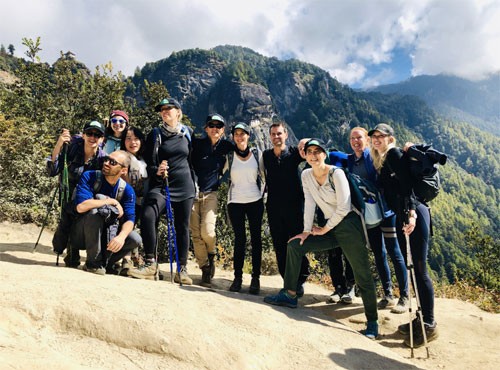
After breakfast, we set out to explore the Paro Taktsang, which is much more popular than the Tiger's Nest (3190m/10,465ft). It is a sacred Vajrayana Buddhist site, where Padmasambhava was believed to have meditated by coming on the Tiger's back flying all the way to this hill, and settling down. Located on the Cliffside at 3180 meters altitude, it is a steep uphill walk to reach there and the round trip is about 5.3 miles. We have lunch during the hike downhill, come to the ground and drive further to Thimphu, which is the capital city of Bhutan. Overnight in Thimphu.

  • AccommodationStandard Hotel
  • MealsBreakfast, Lunch and Dinner
  • Max. Altitude2350m/7,709ft

We have a cool day with a full-day exploration. After having breakfast, we hike to the BBS Tower, which is located at an elevation of 2,865 meters that offers an exquisite view of the whole town of Thimphu. It is a perfect photogenic spot. Next, we continue to explore the surroundings of Thimphu, and we head towards Tashichho Dzong. It is a Buddhist monastery and a Dzong, which has traditionally been the seat of the Druk Desi, the head of Bhutan's civil government. Then we visit the Memorial Chhorten, National Library, and Traditional Medicine Institute. The Smelting Palace, a royal cottage is another site to visit today. Then we back to the hotel and take a rest.

  • AccommodationStandard Hotel
  • MealsBreakfast, Lunch and Dinner
  • Max. Altitude2350m/7,709ft

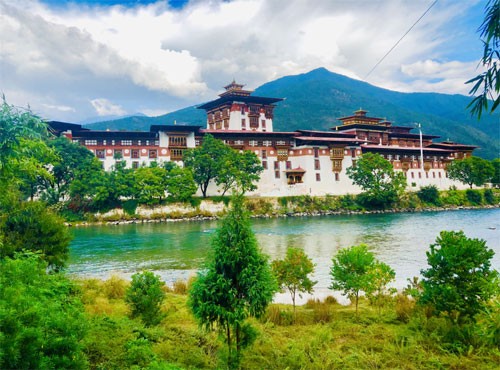
After breakfast, we have some more time to explore the capital city of Bhutan as we have a short distance to drive. The remarkable landscape and the hillside road offer a great experience to travel around the last Shangri La. We visit the Chimi Lhakhang temple on the way with a short hike stopping at Lobesa. The temple is believed to have been blessed by the Divine Madam. Women who seek fertility will be blessed if they pay homage there. Arriving at Punakha, we visit the Punakha Dzong, a beautiful monastery that represents Bhutan. It is the second oldest and biggest monastery in the nation. This remarkable fortress is built between two rivers. Overnight at the hotel.

  • AccommodationStandard Hotel
  • MealsBreakfast, Lunch and Dinner
  • Max. Altitude1250m/4,101ft

We take a wonderful drive from Punakha after having breakfast at the hotel. Gangtey valley is one of the most popular destinations for tourists to explore the cultural delights and the wildlife, especially the bird species. The rare black-necked cranes fly here to escape the toughest winter of Tibet. Gangtey Gompa, located at an altitude of 2800 meters altitude, is the only Nyingmapa monastery in Western Bhutan. It is the main seat of the Pema Lingpa tradition. We explore the valley around and back to our place. Overnight in Gangtey.

  • AccommodationStandard Hotel
  • MealsBreakfast, Lunch and Dinner
  • Max. Altitude2900m/9,514ft

Leaving Gangtey after having breakfast, we drive towards Paro. We have quite a long distance to cover in fact, but the drive is much more fascinating with the views of Rivers, wide and open green valleys, and the mountain range while driving back to Paro. First, you will be transferred to the hotel for a rest and to have lunch. After a while, you walk around Paro, where you may buy some souvenirs for your family and your loved ones. This is the last day in this amazing country.

  • AccommodationStandard Hotel
  • MealsBreakfast, Lunch and Dinner
  • Max. Altitude2,250m/7,381ft

We leave the hotel early in the morning to catch the trans-Himalayan flight from Paro to Kathmandu. It's about an hour rewarding flight as the weather remains great in the morning. You will witness the great Himalayan views before landing in Kathmandu. We don't include any schedule for today once you will be transferred to the hotel by our representative. You can take a rest and walk around the local market to explore the local lifestyles as well. Kathmandu is a medieval town loaded with cultural mysteries and heritage sites.

  • AccommodationHotel
  • MealsBreakfast
  • Max. Altitude1,345m/4,412ft

As per the itinerary, we have managed three major sites already, including Pashupathinath temple, Kathmandu Durbar Square, Boudhanath, and Swayambhunath stupa. This time, we take you to other impressive cultural wonders of Patan and Bhaktapur. Patan Durbar Square is a masterpiece of the Malla dynasty with the ancient palace, Krishna Mandir, Chowks, and a museum. The city itself is known as the city of fine arts. Bhaktapur Durbar Square, which is a typical Newari-style town, consists of various eye-catching sites like the 55-window palace, golden tap, Shikhar-style temples, squares, and stone sculptures that exhibit how prosperous is this square. Then we drive back to the hotel and take a rest.

  • AccommodationHotel
  • MealsBreakfast
  • Max. Altitude1,345m/4,412ft

Our representative transfers you to the international airport, 3 hours prior to catching the flight to Lhasa. Flying above the pristine Himalayan peaks like Mount Everest, Kanchenjunga, and Makalu, you can have an excellent Himalayan memory. Landing at the Lhasa airport, our representative receives you and transfers you to the hotel. As the Tibetan highland is known as the roof of the world, you need to acclimatize to the high altitude. You enjoy the typical hot meals and explore the surroundings of the hotel. A short briefing is given in the evening about the tour itinerary.

  • AccommodationHotel
  • MealsBreakfast
  • Max. Altitude3,660m/12,007ft

With proper acclimatization, we set out from the hotel after breakfast. We have a beautiful sightseeing day around the city. First, we drive to the Potala Palace, which is a historical palace also known as the winter palace of the former Dalai Lamas till they used to stay in Tibet. Capturing the delights of the palace, we move towards the Sera Monastery, which is one of the greatest Gelug Sect monasteries in Tibet. The summer palace of the Dalai Lamas- Norbulingka palace is another attraction for us today to explore the cultural artifacts of Tibet.

  • AccommodationHotel
  • MealsBreakfast
  • Max. Altitude3,660m/12,007ft

On the second day of exploration, we keep busy ourselves exploring the cultural sites and the nearby market in Lhasa after breakfast. We begin to explore the Drepung Monastery, a prominent Buddhist shrine and one of the three immense monasteries in the Tibetan highland. Then we visit the Jokhang temple, which is regarded as the most sacred site in Tibet, situated in the Barkhor market. So, we get a chance to witness the people's movement, their spiritual wills, and the commercial scenario, where people would be seen buying souvenirs. Overnight at the hotel.

  • AccommodationHotel
  • MealsBreakfast
  • Max. Altitude3,660m/12,007ft

You’ll leave Lhasa and fly back to Kathmandu. You can catch some of the most exquisite aerial sights of the Potala Palace, the large Tibetan plateau, and the pristine Himalayas en route to Kathmandu. Upon arrival, you’ll be escorted to your hotel. This marks the end of your journey.

  • AccommodationHotel
  • MealsBreakfast
  • Max. Altitude1,345m/4,412ft

Adventure Club Trek's airport representative transfers you to the international airport for the final departure. The impressive tour of three different countries wraps up here and we are heartily thankful to you for your trust in us for the trip. Have a nice flight ahead.

  • MealsBreakfast

Note: Your safety is of the utmost concern whilst you are traveling with Adventure Club Trek. We will make every effort possible to follow the original itinerary but we reserve the right to change that itinerary if a segment of it becomes a safety issue. Certain mountain regions are remote, natural disasters can happen, weather conditions can decline and there can be illnesses or an injury. To avoid dangerous situations we may occasionally have to make changes to the itinerary to ensure everyone’s safety. That having been said, Adventure Club Trek will strive to provide you with the best possible trekking experience and to keep your safety our number one priority. We thank you for your understanding.

Cost Details

Price Includes

  • Pick up from and drop off at the hotel and the airport on a private vehicle.
  • Standard government-approved three-star accommodation on a twin-sharing basis in Bhutan
  • Full-board meals - breakfast, lunch, dinner, and tea and snacks during the tour in Bhutan
  • Drinking water for the duration of the tour in Bhutan
  • Standard twin sharing accommodation in a three-star hotel in Kathmandu; Pokhara with Breakfast.
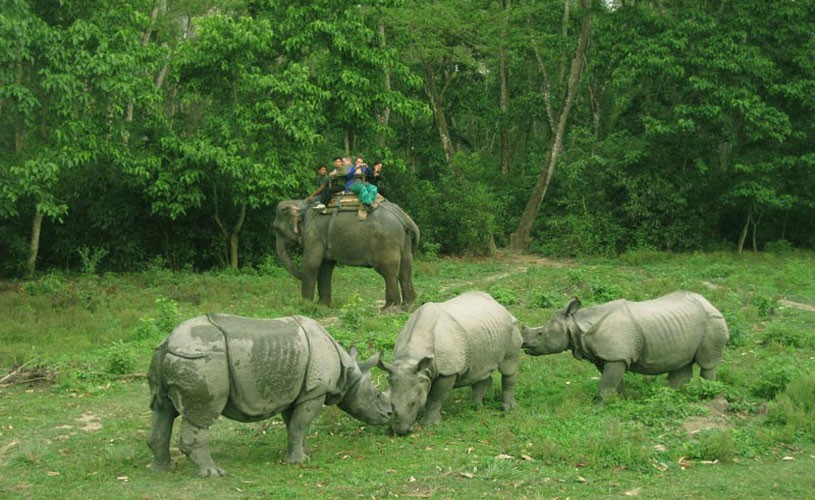
  • Two nights three days wildlife activities inside the Chitwan national park.
  • All meals (breakfast, lunch and dinner) and drinks such as tea, coffee and water while in Chitwan
  • Standard twin sharing accommodation in a two-star hotel in Lhasa with Breakfast.
  • Bhutan Visa fees
  • Tibet Travel Permit and Visa fees
  • All guided city tours in Bhutan, Nepal, and Tibet as mentioned on day-by-day itinerary.
  • Licensed English-speaking local tour guides.
  • All gourd transportation by comfortable private tourist vehicle.
  • Flight from Kathmandu - Lhasa – Kathmandu economic class.
  • Flight from Paro Kathmandu economic class
  • Entry permits and fees for all temples, parks, monasteries, and cultural and historical sites.
  • Staff salary, Food, accommodation, insurance, equipment, and medicine
  • All government taxes and Vat

Price Excludes

  • Nepal entry visa – 15 Days – 30 USD, 30 Days – 50 USD and 90 Days – 125 USD
  • International flights other than specified in the cost inclusion sections
  • Travel insurance which covers emergency Rescue and Evacuation.
  • Lunch and dinner in Kathmandu, Pokhara and Lhasa
  • Item of Personal nature like alcohol, hot and cold drinks and laundry.
  • Personal clothing and equipment.
  • Tips for tour staff and driver ((Tipping is appreciated but it is not mandatory)

Useful Info

Bhutan Tourist Visa Policy and Fees – 2026

Bhutan follows a “high value, low volume” tourism policy, which means the country focuses on welcoming fewer visitors while offering a meaningful, well-managed travel experience. The goal is to protect Bhutan’s culture, environment, and traditions while still allowing travelers to explore the country responsibly.

For travel in 2026, most international visitors must obtain a visa before arriving in Bhutan. You cannot apply for the visa completely on your own. The visa is arranged and processed through a licensed Bhutanese tour operator or their approved international partner.

If you plan your Bhutan trip with Adventure Club Trek, we can take care of the visa application process for you and make it simple and smooth.

Visa Process:

All foreign travelers except citizens of India, Bangladesh, and the Maldives must get visa approval before arrival. You need to send a clear color copy of your passport photo page. Your passport must be valid for at least 6 months from your travel date. Adventure Club Trek will submit your visa application through the official system after your trip booking and required payments are completed.

Visa Fee and SDF (Sustainable Development Fee):

The Bhutan government charges:

  • Visa application fee: USD 40 per person
  • Sustainable Development Fee (SDF): USD 100 per person per night

The SDF rate of USD 100 per night for international tourists is valid until at least August 31, 2027. This fee supports Bhutan’s environment, culture, and public services.

Visa Approval and Arrival:

After payment of the SDF and visa fee, the Bhutan authorities issue a visa clearance letter. You must carry this letter when you travel. Without visa clearance, airlines will not allow boarding. The actual visa is stamped in your passport on arrival at Paro International Airport.

Processing Time:

Visa processing normally takes about 3 working days after all documents and payments are submitted.

Regional Travelers:

Visitors from India, Bangladesh, and the Maldives can obtain an entry permit on arrival. Indian citizens may also travel using a valid Voter Identity Card.

Guide and Transport Requirement

Travelers visiting areas beyond Paro and Thimphu must travel with a licensed guide and private vehicle arranged through a tour operator such as Adventure Club Trek.

Best Time to Visit:

There is no appropriate season, which is to say that Bhutan's warm and temperate climate, never-ending festivals, and rich and abundant heritage sites provide visitors with a wide array of experiences throughout the year across the country. Bhutan has all four seasons, and the climate varies widely depending on the altitude.

Spring (March, April & May)

This is considered the most beautiful time of the year, radiant and ablaze with a spectacular array of bright colors. This is when the valleys are green with fresh vegetation, fruit trees are blossoming, and locals are naturally mirthful and cheery when visitors are most welcome. Also, you can witness the famous Paro Tsechu festival.

Autumn (September, October & November)

Autumn is lovely, with clear and crisp blue skies providing a grand view of some of the tallest unclimbed mountains in the world. It is the best time for trekking and traveling. The climate is cool and temperate. You can get lovely photography opportunities of willows shedding their golden brown leaves, the solitude of parks, and somber views of dzongs and monasteries.

Monsoon (June, July & August)

During these months, Bhutan receives more rainfall than any other region in the Himalayas. Glorious sapphire skies and warm weather are a pleasant time to spend visiting places of cultural and historical interest, though this season is not the best time for trekking. Enjoy a warm, aromatic tea while watching the rainfall from your hotel window. Or, if you possess an adventurous spirit, grab an umbrella/raincoat while it is raining and take a day tour through the town.

Winter (December, January & February)

Winter in Bhutan is sunny, calm, and agreeable. Much of the east-west highway remains snowbound during winter. It is the best time to tour the western districts of Paro, Wangdue, Punakha, Thimphu, and Haa. One of the chief attractions in winter is the beautiful Gangtey (Phobjikha) valley, where you can expect to see a vast expanse of rolling plains with bamboo shrubs.

Sustainable Development Fee (SDF) in Bhutan

Bhutan requires most international visitors to pay a Sustainable Development Fee (SDF). This is a daily tourism fee designed to support environmental protection and public welfare. The SDF helps fund free healthcare, education, cultural preservation, and maintenance of monasteries, dzongs, and heritage sites across the country.

In practical terms, travelers often notice the results on the ground. Trekking trails are cleaner, visitor numbers are controlled, and many cultural sites remain well preserved. This approach follows Bhutan’s high-value, low-volume tourism policy, which focuses on responsible travel instead of mass tourism.

For visitors, this usually means:

  • Less crowding at major attractions
  • Better-maintained trekking routes
  • More authentic cultural interaction
  • A quieter and more respectful travel experience

If you compare it with busy mountain destinations that receive very high tourist numbers, Bhutan feels more organized and less commercial. For trekkers and cultural travelers, that difference is noticeable.

Bhutan  Tour &  Trek Accommodation and Meals:

Accommodation in Bhutan Tours

Accommodation for international travelers in Bhutan is officially regulated and licensed. This means hotels used for cultural tours and trekking programs meet government standards for safety, hygiene, and service quality. Travelers are not placed in random guesthouses. Only approved properties are used for organized trips.

For most Bhutan cultural tours, you stay in comfortable 3- to 4-star hotels (international standard). These hotels are usually clean, quiet, and built in traditional Bhutanese architectural style, with painted woodwork, carved windows, and local design details.

In main destinations such as Paro and Thimphu, hotels typically offer:

  • Private rooms with attached bathrooms

  • Hot showers

  • Heating or room warmers in cold months

  • WiFi in rooms or common areas

  • In-house restaurant

  • Courteous, English-speaking staff

Rooms are normally booked on a twin-sharing basis. A single room can be arranged if requested in advance. A single supplement fee may apply depending on hotel category and trip length.

Hotel names may vary by season and availability, but the quality level remains similar within the same category.

Accommodation  During the Trek in Bhutan:

On Bhutan trekking routes such as the Druk Path Trek, accommodation is provided in fully supported tented camps rather than mountain lodges. Camps are organized and set up daily by the trekking crew.

A standard Bhutan trek camp includes:

  • Personal sleeping tent

  • Mattress and sleeping liner

  • Dining tent with table and chairs

  • Separate kitchen tent

  • Toilet tent placed away from camp

Trekkers are not expected to carry or set up tents. The support team manages camp logistics, cooking, and equipment. This system is designed for remote Himalayan terrain where permanent lodges are not available.

Meals During Bhutan Tours and Treks

Most Bhutan trek and tour packages include full board meals, meaning:

  • Breakfast

  • Lunch

  • Dinner

Meals are provided throughout the cultural tour and during trekking days, so travelers do not need to search for restaurants separately.

Hotels and trekking kitchens usually prepare a mixed menu that may include:

  • Bhutanese dishes

  • Indian food

  • Chinese-style meals

  • Continental options

This gives flexibility for different tastes and dietary habits.

Vegetarian and non-vegetarian food is widely available. Non-vegetarian meals often include chicken, pork, beef, or fish, depending on location and supply. Trekking meals are simple, fresh, and cooked hot at camp.

Helpful meal tips for travelers:

  • Share dietary needs before the trip

  • Inform your guide about allergies.

  • Request less spicy food if needed

  • Choose freshly cooked dishes in remote areas

Kitchen teams and hotel staff are generally experienced with international guests and can adjust meals when informed in advance.

Trekking Gear and Equipment
Pack a sturdy duffel bag (maximum 15 kg) for your main luggage and a 20–30 L daypack for daily essentials. A warm sleeping bag, trekking poles, and microspikes or crampons are essential for comfort and safety. Bring water bottles or a hydration system with purification tablets, along with a headlamp, power bank, and earplugs.

1. Duffel bag
A large, waterproof duffel bag or rucksack for your main luggage. Keep the weight under 15 kg so it is manageable for pack animals.

2. Daypack
A 20–30-liter daypack with a rain cover for items you will carry each day.

3. Sleeping bag
A warm, insulated sleeping bag rated for sub-zero temperatures (–20°C to –30°C) is recommended for camping.

4. Trekking poles
Provide stability on steep ascents and descents.

5. Microspikes or crampons
Useful for navigating icy or slippery trail sections.

6. Water bottles or hydration system
Carry a reusable bottle with at least 2 liters capacity. Guides may provide boiled or filtered water, but personal purification tablets or a filter are advisable.

7. Headlamp or flashlight
A reliable light source with spare batteries for evenings at camp.

8. Camera
Bring sufficient memory and extra batteries to capture the scenery.

9. Power bank
Helpful for charging devices where electricity is limited.

10. Earplugs
Recommended for better sleep, particularly in city areas like Paro and Thimphu, where stray dogs can be noisy at night.

Most Popular  Place to visit in Bhutan:

Paro – Thimphu – Punakha – Dochula Pass

The most popular Bhutan travel route connects Paro, Thimphu, Punakha, and Dochula Pass. This short and well-designed circuit is ideal for first-time visitors who want to see Bhutan’s culture, landscapes, and historic landmarks without long travel distances.

Paro is the main entry point because Bhutan’s only international airport is located here. It is also home to the famous Tiger’s Nest Monastery (Taktsang), one of the most important cultural and spiritual sites in Bhutan. The hike to Tiger’s Nest is a half-day uphill walk along forest trails and viewpoints, ending at a cliffside monastery with wide valley views. It is often the highlight of a Bhutan trip for trekkers and cultural travelers.

Thimphu: Culture, Museums, and Daily Bhutanese Life

Thimphu, the capital city, is about a one-hour drive from Paro. It offers the best introduction to Bhutanese culture and modern life in one place. Visitors can explore monasteries, heritage museums, handicraft centers, and local markets.

Key attractions include:

  • Buddha Dordenma statue viewpoint

  • Folk and textile museums

  • Traditional arts and crafts schools

  • Weekend farmers’ market

Thimphu helps travelers understand how Bhutan balances tradition with gradual development. Roads, cafés, and shops are modern, but dress, architecture, and daily rituals remain strongly traditional.

Punakha: River Valleys and Historic Dzong Architecture

Punakha lies at a lower elevation and has a warmer climate than Paro and Thimphu. The valley is known for rivers, farmland, and traditional villages. It is a good place to experience rural Bhutan scenery.

The main landmark is Punakha Dzong, built at the meeting point of two rivers. It is widely regarded as one of the most beautiful dzongs in the Himalaya because of its location, design, and seasonal colors. In spring, jacaranda and other flowering trees add strong color around the fortress area.

Light hikes, village walks, and suspension bridge visits are common activities here, making Punakha a relaxed but very scenic stop.

Dochula Pass: Mountain Views and 108 Stupas

Dochula Pass sits on the mountain road between Thimphu and Punakha and is one of the most photographed viewpoints in Bhutan. The pass is marked by 108 memorial stupas (chortens) arranged across a ridge.

On clear days, travelers can see a wide stretch of Himalayan peaks from the viewpoint. The area is also a good short stop for walking, photos, and fresh mountain air during the drive.

Why This Route Works Well for First-Time Bhutan Visitors

The Paro–Thimphu–Punakha–Dochula Pass itinerary is popular because it is compact, diverse, and logistically simple. Within a few days of travel, visitors can experience:

  • Major monasteries and dzongs

  • Classic Bhutan hiking routes

  • Mountain passes and valley landscapes

  • Museums and cultural centers

  • Rural and urban Bhutan

For trekkers, culture-focused travelers, and short-holiday visitors, this route provides a balanced and authentic Bhutan experience without long or difficult travel days.

Bhutan Currency and Practical Money Tips for Travelers:

Bhutan’s official currency is the Bhutanese Ngultrum (BTN). It is pegged at the same value as the Indian Rupee (INR), so the exchange rate is equal and easy to understand for travelers coming from India or carrying INR.

In everyday travel situations, Indian rupees are widely accepted in many hotels, shops, and transport services. However, smaller INR notes are much easier to use than large denominations, especially in local markets and small businesses.

Travelers should know one important rule: old INR 500 and 1000 notes are not valid in Bhutan and will not be accepted for payment or exchange.

From on-the-ground travel practice, the most reliable way to manage money in Bhutan is:

  • Carry BTN cash for daily local expenses
  • Keep small INR notes for flexible payments
  • Hold a small amount of US dollars as a backup for bank exchange if needed

This mixed-currency approach works well, especially in rural towns and trekking areas where card payment systems and exchange counters are limited. It helps avoid delays and payment problems during your trip.

Internet and Tourist SIM Cards in Bhutan

Tourist SIM cards in Bhutan are easy to get at Paro International Airport and in major towns like Thimphu. Registration is simple and usually requires your passport copy.

Mobile data and hotel WiFi work well in cities and main travel hubs. Messaging, maps, and normal browsing are usually smooth there. In remote valleys and trekking regions, network coverage becomes weaker, and speeds drop.

Helpful practice for trekkers and travelers:

  • Download offline maps before leaving cities.
  • Save flight tickets and permits on your phone
  • Keep important documents available offline.

This avoids problems when the signal becomes slow in mountain areas.

Flights to Bhutan and Paro Airport:

Paro International Airport is Bhutan’s main international gateway. It is the only international airport in the country and is known for its mountain valley location.

Regular Bhutan flights usually operate from:
  • Kathmandu
  • Delhi
  • Bangkok
  • Limited seasonal flights from Singapore

The flight approach to Paro is considered one of the most scenic mountain landings in the world. On clear days, passengers can see Himalayan peaks, deep valleys, and forested ridges during descent.

Useful planning tips:

  • Choose a window seat for mountain views.
  • Morning flights often have better visibility.
  • Keep buffer time for onward connections since the weather can affect schedules.

For more information about useful information then please visit  : 
Ask a Question

Sign up for our newsletter

Drop Us a Message