Everest Base Camp Trek via Cho La Pass with Heli Return – 16 Days

Trip Facts

  • Duration 16 Days
  • Difficulty Level Strenuous
  • Destination Nepal
  • Transportation Private Vehicle, Domestic Flights and Shared Helicopter Ride
  • Activity City Tour and Approximately 5-6 hours Trekking/Hiking, & Heli Ride
  • Best Season Feb-May and Sept - Dec
  • Group Size Mini 2, maxi 14 People
  • Trip Start/End Kathmandu
  • Max Altitude 5545m/11283ft at Kalapatthar

Key Highlights of EBC Trek Via Cho La Pass with Heli Return:

  • Scenic flight to Lukla and trek through classic Sherpa villages

  • Acclimatizing in Namche Bazaar and visiting the Everest View Hotel

  • Explore the stunning  Gokyo Lakes and climb Gokyo Ri for 360° Himalayan views

  • Cross the dramatic Cho La Pass with breathtaking glacier landscapes

  • Classic hike to Everest Base Camp and visit to the Khumbu Icefall.

  • Reach Everest Base Camp and enjoy sunrise from Kala Patthar

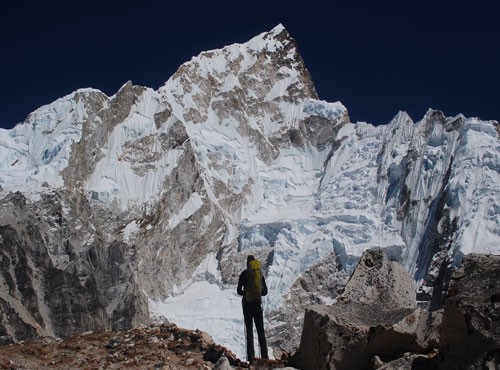
  • Stunning aerial views of Everest, Lhotse, Nuptse, Ama Dablam

  • Experience a comfortable helicopter return to Lukla

  • Helicopter return from Gorakshep or Kala Patthar, saving days of downhill walking.

  • Perfect 16-day adventure with fewer crowds and unbeatable scenery

EBC Trek Gokyo Cho La Pass Heli Return—Best Price 2026

If you’ve been dreaming about reaching Everest Base Camp but want a quieter, more scenic way to get there, this route is a breath of fresh air. Want to skip the busiest trails? This 16-day trek through Gokyo Lakes and over Cho La Pass feels like a secret—peaceful valleys, turquoise lakes, and big open views every day.

Instead of following the crowds, you’ll wind through the Gokyo Valley, climb a dramatic high pass, and then meet the classic EBC trail at just the right moment. Some mornings you’ll feel like you’ve stepped into a postcard; other days you’ll find small, quiet moments in Sherpa villages that stick with you.

The best part of the trek is after standing at Everest Base Camp and watching the sunrise from Gorakshep, you don’t have to walk all the way back. A helicopter takes you out of the mountains, giving you one last, unforgettable view from the sky. It’s a trip that mixes effort with comfort—and it’s exactly the kind of Himalaya trek that stays with you.

Your journey begins in Kathmandu, a vibrant city full of temples, markets, and fluttering prayer flags. Walking through Thamel or visiting Boudhanath Stupa, you’ll feel the excitement building for your Himalayan trek.

Before heading to the mountains, your guide will assist with essential trekking permits, including the Sagarmatha National Park Permit and the Khumbu Pasang Lhamu Rural Municipality Permit, which are required for the Gokyo–EBC trek. This is also a great time to get last-minute gear and review your walking hours per day, ensuring you’re prepared for the high-altitude adventure ahead.

The next morning, you hop on the short but unforgettable flight to Lukla, often known as the gateway to Everest. Once you land at Lukla Airport, the trail eases you into the journey as it winds down to Phakding (2,610 m) before gradually climbing toward Namche Bazaar (3,440 m), your first big acclimatization stop.

Expect about 5–6 hours of walking each day, passing through warm Sherpa villages, cozy little bakeries, and viewpoints that frame Ama Dablam beautifully. This stretch is a wonderful mix of culture, scenery, and gentle adventure—perfect for easing into the trek.

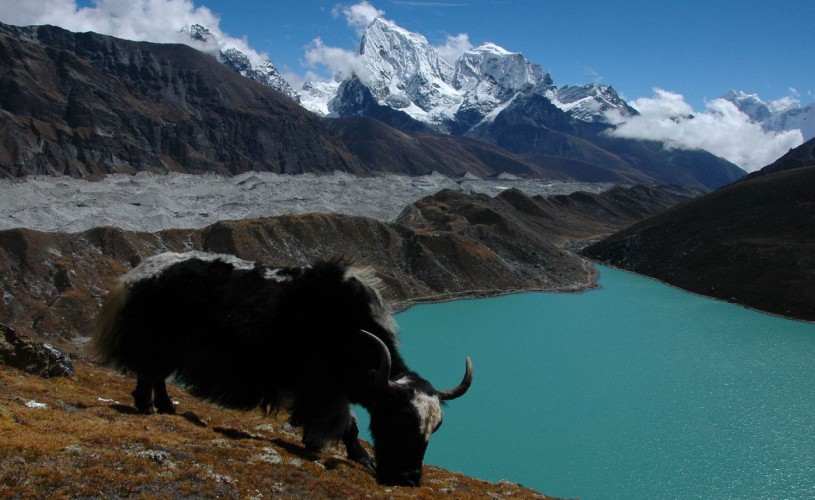
Leaving Namche, the trail grows quiet as you enter the stunning Gokyo Valley, where the turquoise Gokyo Lakes sparkle beneath towering Himalayan peaks. A sunrise climb to Gokyo Ri offers breathtaking 360° views of Everest, Cho Oyu, and Makalu. This peaceful Gokyo–EBC trek is perfect for trekkers seeking a scenic, less-crowded Everest Base Camp route with the comfort of a helicopter return.

Next comes the challenging yet rewarding Cho La Pass (5,420 m), a glacier-covered high pass with icy ridges and sweeping vistas. With proper acclimatization and your guide’s expertise, the crossing is entirely manageable. Every step across this high-altitude landscape is an unforgettable moment that combines effort with immense reward.

After descending from the pass, the trail reconnects with the classic EBC route, leading to Gorakshep (5,164 m) and finally Everest Base Camp (5,364 m). Standing amidst prayer flags and glaciers where climbers begin their summit attempts is deeply moving.

The next morning, a short hike brings you to Kala Patthar (5,545 m), arguably the best sunrise viewpoint of Everest, offering picture-perfect Himalayan panoramas. Instead of trekking back for several days, you enjoy a helicopter return to Kathmandu, soaring above glaciers, valleys, and the trails you walked.

This option combines adventure with comfort and gives your Everest Base Camp trek package a grand finale. For those ready to secure their spot, you can book your helicopter-return trek today and experience the 16-day Everest Base Camp trek with helicopter return in the best seasons—spring or autumn.

If this itinerary doesn’t fit your travel plans, you have two great alternatives. You can choose our Everest Base Camp Trek with Helicopter Return—12 Days, which follows the classic EBC route and includes a scenic helicopter flight from Gorakshep to Lukla, followed by a regular flight back to Kathmandu.

If you prefer to skip all flights from Lukla entirely, our Everest Base Camp Trek with Helicopter Return—11 Days offers a direct helicopter ride from Gorakshep to Kathmandu, giving you the most comfortable and time-saving way to end your adventure.

To book your trip:

Are you traveling alone and seeking to join the Everest Base Camp Trek via Cho La Pass with Heli Return—16 Days? Just send us an email at [email protected] or [email protected]. For 24/7 direct assistance, call Mr. Birendra at +977-9851025658 (WhatsApp and Viber). — We’d be happy to help!

At Adventure Club Trek, we’ve been running helicopter tours since 2018 with a 98% satisfaction rate. Our Trek Everest Base Camp Trek is at the best prices with excellent service, better than most other tour operators. Don’t just take our word for it—check out what travelers say about us on Google and TripAdvisor!

For instant booking, click the "Book Now or visit our "Contact Us" 

How Much Does the EBC Gokyo Cho La Pass Trek with Heli Return Cost?

The Gokyo–Cho La Pass–Everest Base Camp trek with a helicopter return typically costs USD 2679 per person when you join a group. This price applies for 2026 and the years ahead. You can join a group from Kathmandu, book a private trek, or even do the trip solo with us.

The price can change depending on the type of package you choose. Group joining treks are the most budget-friendly, while private and solo treks offer more flexibility and personalized service.

If you’re planning a private trip, you can check our “Book a Private Trip” section and pick the date that works best for you based on your group size. The package covers airport transfers, transportation, Lukla flights, experienced guides and porters, accommodation, meals, permits, and several helpful services to make your journey smooth and enjoyable.

How difficult is the EBC Trek via Cho La Pass with a heli return?

The Everest Base Camp Trek via Cho La Pass with a heli return is considered moderately difficult to challenging because it combines high altitude, long walking days, and the demanding crossing of Cho La Pass.

Most of the journey takes place above 3,000 meters, where the air gets thinner and your body has to work harder. This means you’ll get tired more quickly, and you must acclimatize properly to avoid altitude sickness.

The toughest part of the route is the Cho La Pass at 5,420 meters, a steep and rocky climb that may include icy sections depending on the season. Trekkers often walk 6–8 hours a day, especially on days leading to Gokyo Ri, Cho La Pass, or Kala Patthar.

The best part of this trek is that the helicopter return from Gorakshep or Kala Patthar saves you several days of downhill trekking, reducing fatigue and the strain on your knees. With good fitness, preparation, and a steady pace, even first-time high-altitude trekkers can complete this rewarding and scenic adventure.

When is the best time to trek EBC via Gokyo Lakes and Cho La Pass?

The best time to trek Everest Base Camp via Gokyo Lakes and Cho La Pass is during spring (March–May) and autumn (September–November), when the weather is stable, skies are clear, and the Cho La Pass is generally safe to cross.

Spring offers colorful rhododendron forests, warming temperatures, and excellent visibility, making it ideal for photography and high passes. Autumn brings crisp air, fantastic mountain clarity, and comfortable trekking conditions. Cho La Pass can be unpredictable in winter due to heavy snow, and monsoon brings rain, cloud cover, and slippery trails. For the safest and most enjoyable experience
Required Fitness, Preparation, and Experience for the Cho La Pass Trek

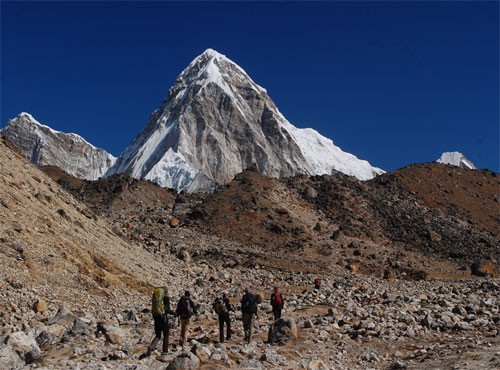
To complete the Everest Base Camp via the Cho La Pass Trek comfortably, trekkers should have good physical fitness, high-altitude trekking experience, and strong mental preparation.

This route includes challenging sections such as crossing the glacier near Cho La Pass, walking 6–8 hours a day, and managing steep ascents and descents. A training routine that includes cardio, long hikes, stair climbing, and strength exercises helps prepare your body for altitude and endurance.

Light backpack experience also improves your confidence on uneven terrain. While technical climbing skills are not required, the trek demands stamina, proper pacing, and the guidance of an experienced mountain team. With the right preparation, this journey becomes both achievable and deeply rewarding.

Accommodation & meals on the EBC via the Cho La Pass Trek

Accommodation along the Everest Base Camp route via the Cho La Pass feels simple but comforting, with teahouses run by welcoming Sherpa families. The rooms are basic yet cozy, usually offering twin beds, warm blankets, and a common dining area heated by a traditional stove.

As you climb higher, the teahouses get more basic, but the friendliness of the locals stays the same. You’ll eat warm, filling meals such as dal bhat, soups, noodles, fried rice, eggs, and Tibetan bread. These dishes help you stay warm and give you the energy you need in the cold, thin mountain air.

Because the Gokyo Valley and Dzongla areas have fewer lodges, booking your rooms in advance through a trusted trekking operator is the best way to avoid any last-minute worries. These villages can fill up quickly, especially in peak seasons, so a little planning goes a long way in keeping your journey smooth and comfortable.

Itinerary

+ Expand All- Collapse All

Upon your arrival at Tribhuvan International Airport (KTM), you will be welcomed by a representative from Adventure Club Trek. After sorting out your customs formalities (visa and so on), you will be transferred to your respective hotel in Adventure Club Trek’s private vehicle, giving you some time to freshen up. After this, you will attend an orientation about your trek led by the trekking leader over a welcome dinner. Overnight in Kathmandu.

  • AccommodationHotel
  • MealsWelcome Dinner
  • Max. Altitude1,350 m / 4,429 ft

After breakfast, our city guide will take you to Kathmandu's four UNESCO World Heritage Sites. Swayambhunath Stupa, the famous Buddhist monkey temple, is located on the hill from where you can get a picture of Kathmandu Valley from a bird's-eye view. Pashupatinath Temple, one of the most important pilgrimages for Hindus, is located in the city's eastern part. Likewise, Buddhanath is the largest spherical stupa in Asia. You will also visit the Kathmandu Durbar Square, a centuries-old royal palace, now turned into a national museum, temples, and other buildings, with the finest architecture, delicate cuts, and wood carvings, and Patan Durbar Square. In the afternoon, we get our equipment checked by our trekking leader, get introduced to fellow participants, and discuss our trip. Overnight in Kathmandu.

  • AccommodationHotel
  • MealsBreakfast
  • Max. Altitude1,350 m / 4,429 ft

35-minute flight from KTM, 5-6-hour drive, 20-minute flight from Manthali, & 3-4-hour trek


Manthali to Lukla Flight (March, April, May, October, and November)


During peak seasons, such as March, April, May, October, and November, the flight to Lukla will be operated from Ramechhap/Manthali due to air traffic expansion. The Manthali/Ramechhap airport is about a 4-hour drive from Kathmandu. On this day, we wake up at 2:30 a.m., take an escorted shuttle to Manthali airport on a shared tourist vehicle, and board a 20-minute flight to Lukla.


Kathmandu to Lukla Flight(January, February, June, July, August, September, and December)

The flight to Lukla is typically operated from Kathmandu during nonpeak seasons, which include January, February, June, July, August, September, and December. Please be aware that the decision regarding the operation of flights solely depends on the airline and is influenced by the volume of travelers during a specific month. On this day, we wake up at 5 to 6 a.m. Our staff will escort you to the domestic airport terminal in Kathmandu, and you will board a 35-minute flight to Lukla.

  • AccommodationTeahouse/Guesthouse
  • MealsBreakfast, Lunch and Dinner
  • Max. AltitudeMax. Altitude: 2,800m/9184ft (Lukla) & 2,652m/8,698ft (Phakding)

We’ll start our day with breakfast in Phakding before preparing for the trek to Namche Bazaar, the largest Sherpa village in Nepal. The journey begins with a crossing over the Dudh Kosi River via a long suspension bridge, followed by a scenic hike through a dense pine forest to reach Monjo, approximately two hours away. From there, we proceed to the entrance of Sagarmatha National Park for a brief permit check before descending to the Dudh Kosi River, passing by Mani stones along the way. Our route continues to Jorsale, where we will stop for lunch. Afterward, the trail ascends towards Namche, following the riverbank and crossing two bridges, including the famous Hillary Suspension Bridge. The final stretch is a challenging uphill climb, but the effort is well worth it—upon reaching Namche Bazaar, you’ll be greeted with your first breathtaking view of Mount Everest. Overnight in Namche Bazaar.

  • AccommodationTeahouse/Guesthouse
  • MealsBreakfast, Lunch and Dinner
  • Max. Altitude3,440m/11,283ft

Today is reserved for acclimatization in Namche Bazaar, an essential part of ensuring a safe and successful journey to Everest Base Camp. To aid in adapting to the higher altitude, we take a scenic hike to Syangboche and continue ascending to the Everest View Hotel—one of the highest-located hotels in the world. From here, we enjoy breathtaking panoramic views of some of the Himalayas’ most iconic peaks, including Everest, Lhotse, Nuptse, Ama Dablam, Thamserku, and Kongde. After a tea or coffee break at the hotel, we descend to the Sherpa village of Khumjung for lunch. In Khumjung, you may choose to visit the historic Khumjung Monastery, believed to house a scalp of the mythical Yeti.

Upon returning to Namche, you can relax or explore the vibrant town. Optional visits include the Sherpa Culture Museum or the village of Thame, where you can see the school founded by Sir Edmund Hillary, the first to summit Mount Everest. Overnight stay in Namche Bazaar.

  • AccommodationTeahouse/Guesthouse
  • MealsBreakfast, Lunch and Dinner
  • Max. Altitude3,440m/11,283ft

After breakfast, we set off for Phortse Thanga. We ascend Khumjung Hill and descend east of the village down the broad valley leading to the Dudhkoshi River, from where the route turns north. At a point ahead, the trail is divided into two, and your guide will decide which path you will follow. You will witness a Chorten, a Buddhist shrine, on top of the ridge at 3973 m. On the way, we visit Mohang, the birthplace of the reincarnated Lama of Rongbuk Monastery of Tibet; the Lama is believed to have introduced Buddhism in the Khumbu region of Nepal. Then, we follow the trail that descends in a series of steep switchbacks down a sandy slope to the Dush Koshi River. We stay overnight near the river in Phortse Tanga. Overnight in Phortse Thanga. Overnight in Phortse Thanga.

  • AccommodationTeahouse/Guesthouse
  • MealsBreakfast, Lunch and Dinner
  • Max. Altitude3,680m/12,073ft

After breakfast, we set off for Machhermo. First, we prepare for the challenging climb we will be making. Next, we hit the trail through the rhododendron forest and crossed a waterfall before we reached the village of Tongba. Finally, we continue the uphill path as we pass by several villages, including Dhole, Luza, and Labarma, before reaching the destination for the day. At night, you are likely to hear the bubbling of the Dudhkoshi River. Overnight in Machhermo.

  • AccommodationTeahouse/Guesthouse
  • MealsBreakfast, Lunch and Dinner
  • Max. Altitude4,470m/14,665ft

After breakfast, we begin the trek with a climb on a ridge that rewards us with a splendid view of the valley below Mt. Kang Taiga (6,685 m) and Mt. Cho Oyu (8,153 m). We halt at Phangkha, and then we descend to a riverbank. We climb up the Ngozumpa Glacier’s terminal moraine via a steep route. The route evens out, making the journey easier after crossing an iron bridge over a local stream.

On the way to the Gokyo Valley, we come across Longpongo Lake at 4,690 m. Next, you will come across Taboche Tsho Lake, which appears bright turquoise when the day is sunny. The two lakes are linked by a stream. There is also another lake called Dudh Pokhari. We will head for Gokyo village near the shoreline of the lake. You will have adequate time to explore around the lake in the afternoon. The sight of Mt. Cho-Oyu in the backdrop of turquoise Dudh Pokhari Lake can be a lifetime memory. Overnight in Gokyo.

  • AccommodationTeahouse/Guesthouse
  • MealsBreakfast, Lunch and Dinner
  • Max. Altitude4,800m/15,748ft

Today, we reserve the day for acclimatization in Gokyo Valley. We hike to Gokyo Ri, a small peak above the Gokyo village. The Gokyo Ri offers a magnificent view of four 8,000-meter peaks—Mt. Cho Oyu, Mt. Everest, Lhotse, and Makalu—and a bird's-eye view of Gokyo village located on the edge of the third lake, along with Ngozumpa Glacier and Cholatse. We also witness the beam of sunlight turning Mt. Everest into a golden object. Subsequently, we will bask in the tranquil serenity of the fourth holy lake, Thonak Tsho. Depending on the extra time and your physical condition, we will decide whether to hike to the fifth sacred lake, Ngozumba Tsho, where you can observe the Ngozumpa glacier, the longest in the Himalayas. Finally, we went back to Gokyo village for the second night. Overnight in Gokyo.

  • AccommodationTeahouse/Guesthouse
  • MealsBreakfast, Lunch and Dinner
  • Max. Altitude5,357m/17,575ft

After breakfast, we trek through the magnificent Ngozumpa glacier to reach the other side of the mountain. You will enjoy the impressive sight of the Himalayas on this short trek from Gokyo to Thagnak. Overnight stay in Thagnak.

  • AccommodationTeahouse/Guesthouse
  • MealsBreakfast, Lunch and Dinner
  • Max. Altitude4750 m/15,583ft

The trek to Dzongla via Cho La pass could be the most challenging because of the steep and slippery path on the glacier. It is difficult to hike through the rocks covered by ice. Although crampons are not used, microspikes can be helpful in adverse weather conditions. Acclimatization made in the Gokyo valley becomes useful here while ascending to the Cho La pass. We hike through the side of a frozen lake to reach the top of the Cho La pass, decorated with prayer flags. Here, you will notice Mt. Ama Dablam presiding over the range of the Himalayas to the south, even as Cholatse soars to the west and Lobuche East and Baruntse rise sharply to our right. We pass by some crevasses and reach Dzongla village, which offers a fantastic view of Cholatse, Ama Dablam, and Lobuche, along with Pheriche Village, farther below. Overnight in Dzongla

  • AccommodationTeahouse/Guesthouse
  • MealsBreakfast, Lunch and Dinner
  • Max. Altitude5545m/18192ft(Chola- Pass) 4840m/15879ft Dzonga

This will be your short and relaxing trek descending from Dzongla. We hike through a meadow-like trail with a constant view of Lobuche Peak. The path then curves from the wide riverbed on the way before we reach Lobuche. We will take a rest and prepare for the upcoming challenging day. You will trek to the Everest Base Camp the next day. Overnight in Lobuche.

  • AccommodationTeahouse/Guesthouse
  • MealsBreakfast, Lunch and Dinner
  • Max. Altitude4950m

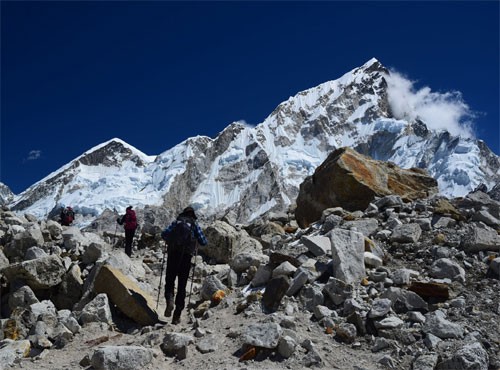
This is the day to realize the dream of exploring the Everest Base Camp. In the early morning, we embarked on the journey through rocky terrains alongside the Khumbu glacier to reach Gorakshep (5181 m/16994 ft). Subsequently, you will find it hard along the straight trail to the Everest Base Camp due to the accumulation of glacial debris, rocky dunes, and moraine. At the Everest Base Camp, we enjoy the Khumbu Glacier and icefall. The Everest Base Camp is stunningly beautiful as we get awe-inspiring views of Nuptse, Khumbutse, and Pumori. You may engage yourself in capturing the best experience and memories through the lens as we take enough time here. We may find beautiful mountain mice called 'pika' and flocks of Tibetan snow peacocks called Khongma at the base camp. After soaking in the beauty of the mountains, we go back to Gorakshep for an overnight stay. Overnight in Gorak Shep.

  • AccommodationTeahouse/Guesthouse
  • MealsBreakfast, Lunch and Dinner
  • Max. Altitude4750m/15584ft

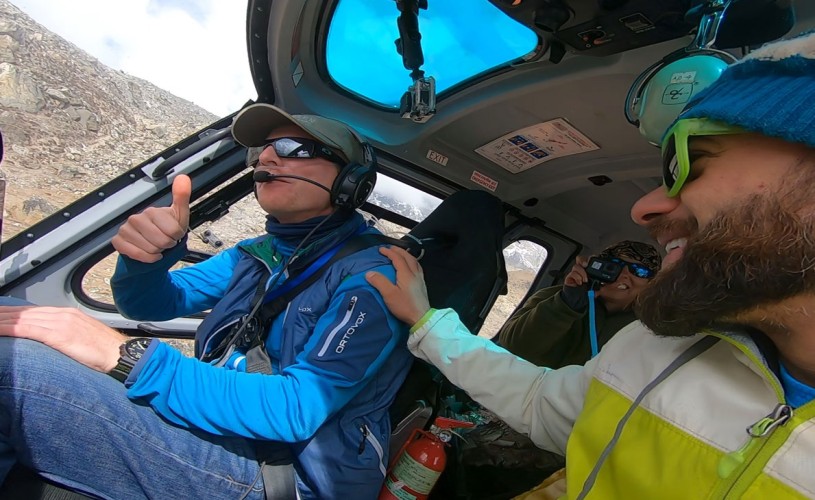
Early in the morning, you’ll begin a short but steep hike to Kala Patthar (5,545 m / 18,193 ft), one of the best viewpoints in the Everest region. As the first rays of sunlight hit the towering peaks, you’ll witness a breathtaking panorama of Mount Everest, Lhotse, Nuptse, and the surrounding Himalayan giants glowing in golden light. After enjoying this unforgettable sunrise, you’ll descend to Gorak Shep for breakfast. Then, board a shared helicopter flight to Lukla, offering a spectacular aerial view of the Everest Valley, glaciers, and mountain villages before completing your incredible high-altitude trekking adventure.

  • AccommodationTeahouse/Guesthouse
  • MealsBreakfast, Lunch and Dinner
  • Max. Altitude5,545 m / 18,193 ft

Lukla to Manthali Flight (March, April, May, October, and November)


The flight from Lukla to Manthali is a 20-minute flight. After that, it is about a 4-5-hour drive to Kathmandu. Please note that the driving hours may vary according to the highway traffic conditions. You’ll be transferred to the hotel in Kathmandu on a shared tourist vehicle.


Lukla to Kathmandu Flight (January, February, June, July, August, September, and December)


The flight from Lukla takes about 35 minutes. After arriving at the airport, you will be transferred to the hotel in Kathmandu via a shared tourist vehicle. Please be aware that the decision regarding the operation of flights solely depends on the airline and is influenced by the volume of travelers during a specific month.

  • AccommodationHotel
  • MealsBreakfast, Lunch and Farewell Dinner
  • Max. Altitude1,350m/4,428ft

Our Everest Base Camp Trek via Gokyo Lakes & Cho La Pass with Heli Return—16 Days—ends here. A representative from the Adventure Club Trek will accompany you and see you off at Tribhuvan International Airport a few hours before the scheduled flight to your home.

Note: If you still have a few days after the trekking schedule, you might be interested in experiencing other adventurous activities like jungle safariRaftingBungee jumping, and paragliding. You may contact the Adventure Club Trek for the arrangement

  • MealsBreakfast

Note: Your safety is of the utmost concern while traveling with Adventure Club Trek. We will make every effort possible to follow the original itinerary, but we reserve the right to change that itinerary if a segment of it becomes a safety issue. Certain mountain regions are remote, natural disasters can happen, weather conditions can decline, and illness or injury can occur. To avoid dangerous situations, we may occasionally change the itinerary to ensure everyone’s safety. That being said, Adventure Club Trek will strive to provide you with the best possible trekking experience and keep your safety our number one priority. We thank you for your understanding.

Trip Map

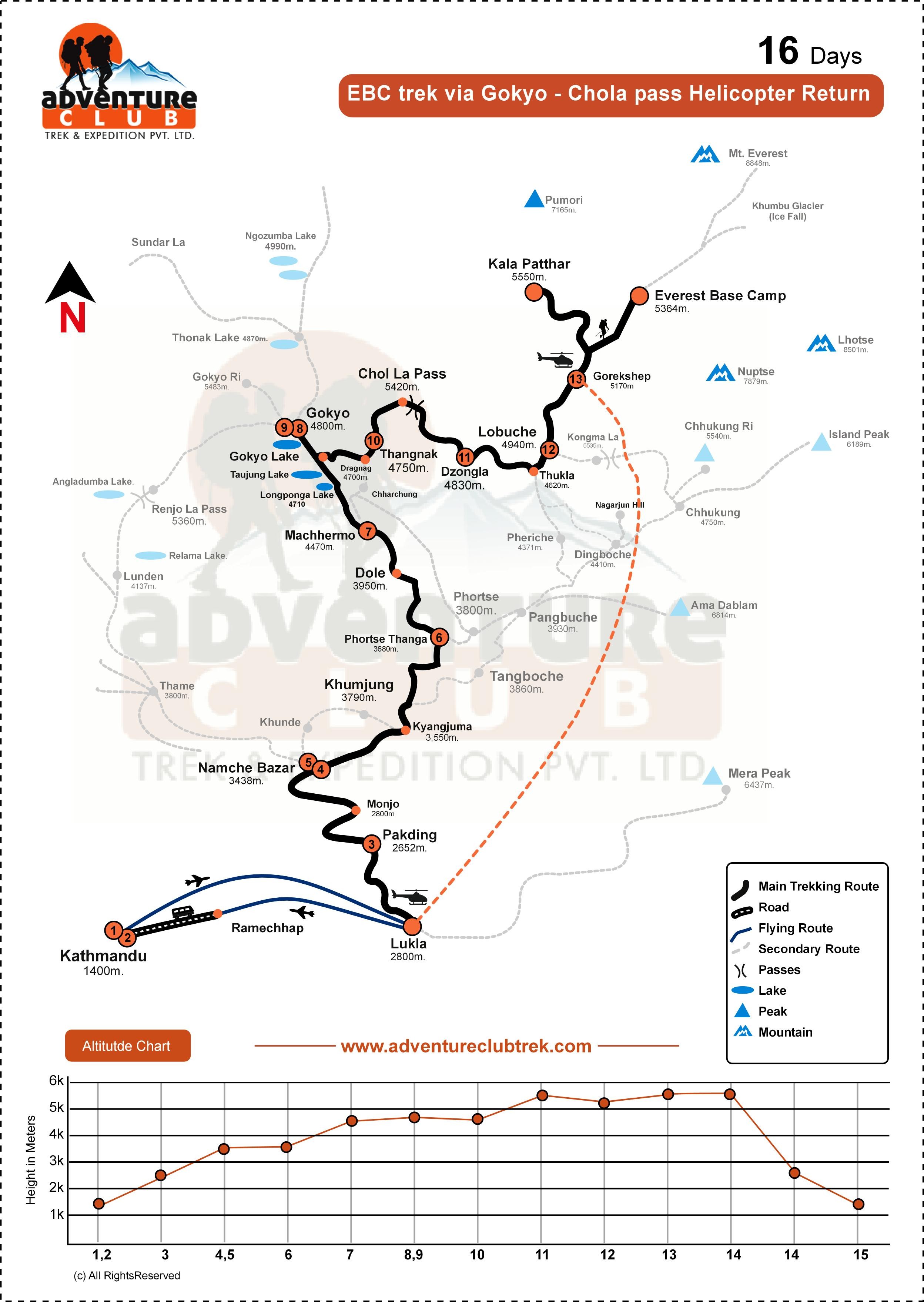
Everest Base Camp Trek via Cho La Pass with Heli Return – 16 Days map

Cost Details

Price Includes

Airport Transfers:

  • Welcome pickup upon arrival at Tribhuvan International Airport
  • Drop off at the domestic terminal before your trek
  • Pickup from the domestic airport after returning from Lukla
  • Final international airport transfer on your departure day

Accommodation:

  • 3 nights in a Kathmandu hotel with breakfast (twin-sharing)
  • 12 nights in cozy mountain teahouses on a twin-sharing basis

Meals:

  • 13 breakfasts: a mix of local and continental options
  • 12 lunches: light and simple meals at tea house lunch stops
  • 11 dinners: vegetarian and non-vegetarian choices from local tea house menus
  • Seasonal Fruits 
  • 1. Welcome and farewell dinner in Kathmandu

Trekking Permits—All Official Paperwork Arranged

  • Local Government Trek Card
  • Sagarmatha National Park Entry Permit
  • Trekkers’ Information Management System (TIMS) card

Domestic Flights:

  • Kathmandu → Lukla flight ticket
  • Lukla → Kathmandu return flight

If flights operate via Ramechhap:

  • Drive from Kathmandu to Ramechhap in a private vehicle.
  • Ramechhap → Lukla flight ticket
  • Lukla → Ramechhap return ticket
  • A jeep or Micro Van back to Kathmandu

Helicopter Service—Time-Saving Mountain Exit

  • Group-sharing helicopter flight from Gorakshep to Lukla

Benefits & Special Takeaways.

  • Adventure Club Trek duffel bag for carrying your personal gear

  • Detailed trekking route map to help you understand the full trail
  • Trip T-shirt as a memorable keepsake
  • Sleeping bag and down jacket provided for the trek (to be returned after the trip)
  • Official Trip Completion Certificate awarded at the end of the journey

Guide & Porter Support—Experienced, Reliable & Caring

  • Licensed English-speaking trekking guide with 10+ years of experience
  • All meals and insurance are covered for the guide and porter
  • Fair wages as per government and tourism association guidelines
  • One local porter for every two guests (up to 22 kg per porter)
  • Essential first-aid kit carried by the team

Price Excludes

  • Nepal Entry Visa Can be easily obtained upon arrival at Tribhuvan International Airport, Kathmandu. Visa fee options: USD 30 for a 15-day visa, USD 50 for a 30-day visa, USD 125 for a 90-day visa
  • Lunch and evening meals in Kathmandu.
  • International airfares/flights (fares and flights can be arranged upon request).
  • Hot showers, extra meals, Wi-Fi, battery charging, and upgraded accommodations during the trek
  • Extra nights in Kathmandu due to early arrival, late departure, or returning earlier than planned.
  • Personal expenses (alcoholic drinks, bottled water, cold drinks).
  • Travel Insurance. 
  • Personal trekking equipment.
  • Tips for guides, porters, and drivers (tipping is expected but not mandatory).

Date & Prices

     
Start DateStart: SundayMarch 01, 2026End DateEnd: MondayMarch 16, 2026StatusStatusAvailablePricePriceUS $2679
Start DateStart: TuesdayMarch 03, 2026End DateEnd: WednesdayMarch 18, 2026StatusStatusAvailablePricePriceUS $2679
Start DateStart: FridayMarch 06, 2026End DateEnd: SaturdayMarch 21, 2026StatusStatusAvailablePricePriceUS $2679
Start DateStart: MondayMarch 09, 2026End DateEnd: TuesdayMarch 24, 2026StatusStatusAvailablePricePriceUS $2679
Start DateStart: ThursdayMarch 12, 2026End DateEnd: FridayMarch 27, 2026StatusStatusAvailablePricePriceUS $2679
Start DateStart: SundayMarch 15, 2026End DateEnd: MondayMarch 30, 2026StatusStatusAvailablePricePriceUS $2679
Start DateStart: WednesdayMarch 18, 2026End DateEnd: ThursdayApril 02, 2026StatusStatusAvailablePricePriceUS $2679
Start DateStart: SaturdayMarch 21, 2026End DateEnd: SundayApril 05, 2026StatusStatusAvailablePricePriceUS $2679
Start DateStart: MondayMarch 23, 2026End DateEnd: TuesdayApril 07, 2026StatusStatusAvailablePricePriceUS $2679
Start DateStart: ThursdayMarch 26, 2026End DateEnd: FridayApril 10, 2026StatusStatusAvailablePricePriceUS $2679
Start DateStart: SundayMarch 29, 2026End DateEnd: MondayApril 13, 2026StatusStatusAvailablePricePriceUS $2679
Start DateStart: TuesdayMarch 31, 2026End DateEnd: WednesdayApril 15, 2026StatusStatusAvailablePricePriceUS $2679

The published dates are guaranteed departures. If the scheduled dates are unsuitable, we will happily create trips to suit your needs. Let us know what kind of trip you are looking for, and our travel experts will help customize your dream destination.

Useful Info

Lukla Flight Delay Information

The weather in mountain areas can be unpredictable, affecting flights to and from Lukla. When the weather is good, the Twin Otter planes are reliable. However, flights may be delayed or canceled due to bad weather or technical issues. We can arrange a helicopter to ensure you stay on schedule in case of flight cancellations or long delays. Helicopters can fly in lower visibility than Twin Otters, meeting the Nepal Civil Aviation rules. You can pay for the helicopter flight in US dollars, credit cards, or traveler’s cheques at our Kathmandu office. We provide a receipt for reimbursement from your travel insurance company. The cost for the helicopter flight is $500 per person, or you can opt for a Helicopter Charter at a rate of $3000. We recommend arriving in Kathmandu one day before the trek to allow time for purchasing trekking gear and adjusting to the time difference. Additionally, allocating extra days after the tour will help minimize the risk of missing your international flight in case of any trekking difficulties or flight cancellations caused by severe weather conditions in Lukla.

Acclimatization And High-Altitude Sickness

The acclimatization planned during the trip helps trekkers adapt to the environment with less oxygen. Our body needs time to adjust to higher altitudes. Rushing to the higher elevation without acclimatization may result in acute mountain sickness (AMS), which could be fatal. The trekkers may suffer from AMS above 2,400m/7,875ft as the amount of oxygen becomes less and less with the increase in elevation.

We can categorize AMS into three categories with its symptoms. The trekker suffering from normal AMS feels giddy, gets headaches, has Nausea, and is out of breath. It is suggested not to worry as it disappears after the body gets used to less oxygen. Likewise, trekkers suffering from mild AMS show symptoms of dizziness, muscular pain, insomnia, headache, vomiting, loss of appetite, rapid heartbeat, and shortness of breath. Mild AMS can be treated with anti-headache medicines.

A person suffering from serious AMS shows heightened symptoms, including shortness of breath, even while resting. The trekker with serious symptoms can barely walk, and fluids may start building up in the lungs. The trekker having serious AMS has to be taken to a lower altitude immediately.

Advanced cases of AMS

If AMS is not treated in time, it can be life-threatening and lead to edema, a condition in which fluid accumulates in the body's tissues. Following are the two serious altitude sicknesses caused at high altitudes.

High Altitude Cerebral Edema (HACE)

In HACE, the brain gets swollen, leading to coma and even death. Its symptoms are paralysis on one side of the body, bladder dysfunction, fatigue, bowel dysfunction, loss of coordination, and confusion. Descend to a lower altitude as soon as possible to prevent the worsening of the condition.

High Altitude Pulmonary Edema (HAPE)

Fluid accumulates in the lungs, which also increases the capillary pressure. Its symptoms include severe shortness of breath at rest, dry cough that later produces frothy pink sputum, and fatigue. Important Note: Severe cases of AMS are rare. All our Adventure Club Trek guides are aware of the symptoms of AMS and can handle it with care. We prioritize acclimatization, talk about the use of Diamox beforehand, and counsel all our trekkers on the risk and preventive factors before and during the trip. Your safety is our main concern.

First-Aid Kit

Our guides and porters are equipped with a basic first-aid kit during regular treks. For expeditions that take on isolated and off-the-beaten trekking paths, a comprehensive first-aid kit is compulsory, and the same goes for climbing expeditions.

  • A bandage in case of sprains.
  • Plasters/ Band-aids and antiseptic ointments for simple cuts
  • Iodine or water filter (optional) instead of buying bottled mineral water
  • Moleskin/Second skin in case of blisters.
  • Aspirin/Paracetamol -painkiller.
  • Oral rehydration salts-Nava Jeevan or Jeevan Jal (orange-flavored ORS)
  • The broad-spectrum antibiotic (norfloxacin or ciprofloxacin).
  • Anti-diarrhea medication (antibiotic).
  • Diarrheal stopper (Imodium - optional).
  • Diamox 250/500mg (for altitude sickness).
  • Gel hand cleaner/sanitizer.

Note: We can add medical supplies per the trekkers' special needs to the first-aid kit given above.

Equipment And Packing List

Here is some information to help you know what to bring for the trek. It's very important not to forget the essential items because they will affect how comfortable and safe you are. At the same time, try not to carry too much unnecessary gear.

General Items:

  • An all-season sleeping bag and a down jacket (we can provide these if needed, but you’ll have to return them after the trek).
  • A duffle bag (we’ll provide one for you during the trek, but it must be returned afterward).
  • A windproof and waterproof lightweight jacket (this is essential for mornings and evenings above 3,000 meters).
  • A daypack.

Important Documents and Items

  • Valid passport, two extra passport-size photos, and airline tickets.
  • Dollars, pounds, or Euros in cash for purchasing a Nepali visa at Kathmandu airport, paying for restaurants and hotels, gratuities, and snacks, and purchasing your drinks and gifts.
  • Credit cards, Bank/ATM/Cash machine cards for withdrawing funds from cash machines (bring a photocopy of your cards), traveler's checks, Etc

  HEAD

  • A bandana or headscarf is also useful in dusty conditions.
  • Warm hat that covers your ears (wool or synthetic)
  • Headlamp with extra batteries and bulbs
  • Sunglasses with UV protection
  • Prescription sunglasses (if required)
  • UPPER BODY
  • Polypropylene shirts (1 half sleeve and 2 long sleeves)
  • Light and expedition-weight thermal tops
  • Fleece wind-stopper jacket or pullover
  • Waterproof (preferably breathable fabric) shell jacket
  • Down vest and jacket *
  • Gore-Tex jacket with hood, waterproof and breathable

LOWER BODY

  •  Non-cotton underwear briefs
  • 1 pair of Hiking shorts
  • 1 pair of hiking trousers
  • 1 pair of lightweight thermal bottoms (seasonal)
  • 1 pair of fleece or woolen trousers
  • 1 pair of waterproof shell pants, breathable fabric

FEET

  • 2 pairs of thin, lightweight inner socks
  • 2 pairs of heavy poly or wool socks
  • 1 pair of Hiking boots with spare laces (sturdy soles, water-resistant, ankle support, "broken-in")
  • 1 pair of trainers or running shoes and sandals
  • Cotton socks (optional)
  • Gaiters (winter only), optional, "low" ankle high version

HANDS

  • 1 pair of lightweight poly liner gloves.
  • 1 pair of lightweight wool or fleece gloves
  • 1 pair of mittens, consisting of 1 Gore-Tex over mitt matched with a very warm polar-fleece mitt liner (seasonal)

TOILETRIES

  • 1 medium-sized quick-drying towel
  • Toothbrush/paste (preferably biodegradable)
  • Multipurpose soap (preferably biodegradable)
  • Deodorants
  • Nail clippers
  • Face and body moisturizer
  • Female hygiene products
  • Small mirror
  • Personal Hygiene
  • Wet wipes (baby wipes)
  • Tissue /toilet roll
  • Anti-bacterial handwash

SLEEPING

  • 1 sleeping bag (good to -10 degrees C or 14 degrees F)*
  • Fleece sleeping bag liner (optional)
  • Rucksack and Travel Bags
  • 1 medium rucksack (50-70 liters/3000-4500 cubic inches, can be used for an airplane carryon)
  • 1 large duffel bag *
  • A small daypack/backpack for carrying your valuables should have good shoulder padding.
  • Small padlocks for duffel-kit bags
  • 2 large waterproof rucksack covers (optional)

MEDICAL

  • Small, personal first-aid kit. (Simple and light)
  • Aspirin, first-aid tape, and plasters (Band-Aids)
  • Anti-diarrhea pills
  • Anti-headache pills
  • Cough and cold medicine
  • Anti-altitude sickness pills: Diamox or Acetylpolyamine
  • Stomach antibiotic: Ciprofloxacin, Etc. Do not bring sleeping pills, as they are respiratory depressants.
  • Water purification tablets or the water filter
  •  Extra pair of prescription glasses, contact lens supplies
  • Extras/Luxuries
  • Reading book
  • Trail map/guidebook
  • Journal and pen
  • Binoculars (optional)
  • Voltage converter (from 220 to 110)
  • Plug adapter (2 round pegs to 2 flat pegs)

Visa And Entry Procedures


Everyone needs a visa to enter Nepal except Indian nationals. Citizens of the SAARC nations like Pakistan, Bangladesh, and Bhutan do not require a visa for 30 days. Fortunately, getting a Nepal visa is an easy process. Tourist visas are issued on arrival at the international airport and official overland entry points. However, travelers from Afghanistan, Iraq, Cameroon, Ghana, Somalia, Swaziland, Senegal, Zimbabwe, Nigeria, Ethiopia, and Liberia have yet to be issued visas on arrival. After you arrive at the Tribhuvan International Airport in Kathmandu, you will find electronic kiosks to assist with your visa processing. After taking the completed form and paying the visa fee, you must stay in the long immigration queue for your visa on arrival.

Visitors can now apply for the online visa within 15 days of their arrival date in Nepal. For this, you will need your Nepal hotel address and a digital passport-sized photo that needs to be uploaded to the online application. After submitting the form online, you need to print out the confirmation page, which has to be furnished at the immigration section in Kathmandu airport, along with your passport and the required visa fee.

Tourists can also apply for a Nepali visa at the local Nepali Embassy or Consulate in their respective countries. Or, they can even mail their visa application to the visa office near their location, but well ahead of time to allow sufficient processing time. Nepal visa information for all categories of travelers and their correspondence cost can be convenient, so for more information and contact details of the Nepali Embassies and Consulate worldwide, you may Contact us for more information.

Whichever way you enter Nepal, you will be given a 15/30/90-day visa as per your requirement. The general Nepal tourist visa fee on arrival for multiple entries is:

15 days – US$30, 30 days – US$50, and 90days – US$125

Tourist visas can be extended for a maximum of 150 days a year. These extensions are granted only at the Department of Immigration offices in Pokhara and Kathmandu. For more information on Nepal visas, visit our visa information page.

Our Trekking Guides/Leaders 

Here at Adventure Club, our staff is like family. We only use locals to support their communities, and we train our staff rigorously to be the best they can be – for you! 

  •  Full first-aid training
  • Guide Training (trekking)
  • English and other common languages (as requested) 
  • Village and Land Conservation 
  • Mountaineering (for specialty expeditions or climbing treks)

All our guides are highly trained in all aspects of trekking, conversation, first-aid, and emergency evacuation. They are all very professional, knowledgeable, and passionate about tourism. They are local guides, and their English is sometimes limited to trek-related topics. They know how to facilitate running a smooth and safe trip whilst appreciating the beauty of the Himalayan world.

Porters Care

On any team, courtesy and respect are fundamental for an enjoyable and worthwhile experience. Our porters are an essential, integral part of each trekking team; as such, they are well-treated and well-paid. After your trek, you will find they have fully earned your gratitude and respect. We expect all trekkers to keep their baggage weight under 22kgs/40lbs. Adventure Club Trek maintains a full commitment to the rights of our porters, providing them with appropriate clothing, gear, and lodging. In case of serious accident or sickness, they receive the same care as anyone else employed on the trekking team, even including evacuation by helicopter at our expense if appropriate. We fully support the IPPG (International Porter Protection Group), which strives to maintain and improve our porter's working conditions.

Travel Insurance

To be adequately protected in terms of insurance, you will need specialist travel insurance for participation in hazardous activities. A travel insurance policy that covers helicopter evacuation, trip cancellation, injury, death, lost baggage, theft, liability, medical treatment, and expenses is strongly recommended. Ensure the insurance covers all the activities you will be undertaking during your stay in Nepal, such as trekking and climbing. Suppose you are injured and unable to travel. In that case, you can ask for a rescue helicopter from a remote area only if you have definite proof that you can pay for it. Adventure Club Trek has an agreement in Kathmandu that guarantees payment for helicopter evacuations. They pay a cash deposit to the helicopter operator and collect the money from you once you have been rescued. Be sure your policy specifically covers mountaineering or alpinism, or you may need help to settle a claim.

Group Size and Team Composition 

We always form a small group of like-minded people to give them a wonderful and perceptive travel experience. It provides opportunities to interact and share in a fun-filled environment in the wilderness. Generally, our travel group comprises a maximum of 16 members. We need at least two participants to run our fixed departure dates. For private trips, the number of group members does not apply. We always strive to form a team, ensuring that the members are comfortable with one another.

Tipping 

Tipping is optional in Nepal as most services include a service charge. However, if you want to express your gratitude, you are free to tip drivers and hotel staff. People usually welcome such generosity. When tipping your porters or trekking leaders, use your discretion as per the quality of the services. Tip money does not form a part of our employees' wages. However, you can use tipping to show appreciation for excellent service at the end of the trip.

FAQs

  • Q1. How Difficult Is the Everest Base Camp Trek via Cho La Pass with Heli Return (16 Days)?

    The Everest Base Camp Trek via Cho La Pass with Heli Return is a moderately difficult to challenging journey due to its high altitude, long walking days, and the steep Cho La Pass crossing. Much of the route sits above 3,000 meters, where thinner air makes you breathe harder and feel tired more quickly. The biggest challenge is the Cho La Pass at 5,420 meters, a rocky and sometimes icy climb that demands good balance, confidence, and steady energy. Trekkers normally walk 6–8 hours a day, especially during the approaches to Gokyo Ri, the pass, and Kala Patthar. Cold temperatures, often below –10°C, increase the effort. Since the altitude is high, the risk of altitude sickness is real, so proper acclimatization and a slow pace are essential. Although previous high-altitude experience helps, even first-time trekkers can succeed with good fitness and preparation. The helicopter return from Gorakshep reduces fatigue by avoiding the long walk back.

  • The EBC Gokyo Cho La Pass Trek with Heli Return is a 16-day adventure that combines the beauty of Gokyo Lakes, the challenge of Cho La Pass, and the iconic Everest Base Camp. You trek through Sherpa villages, glaciers, and high passes before crossing into the Everest region. After reaching EBC and climbing Kala Patthar, a helicopter picks you up from Gorakshep, saving days of walking back to Lukla. This option offers a perfect blend of adventure and comfort, giving trekkers a full Himalayan experience without the long return descent. It’s ideal for those who want both scenic diversity and a faster, safer exit.

  • Helicopters generally do not land directly at Everest Base Camp due to unstable ground and safety restrictions. Instead, they land at Kala Patthar or nearby (Gorekshep) flat areas when weather and wind conditions allow. Kala Patthar offers one of the best panoramic views of Mount Everest, making it an ideal landing spot for photos and sightseeing. From Gorakshep, the helicopter flight provides spectacular aerial views of the Khumbu Glacier and surrounding peaks. Your trekking agency will coordinate the landing based on weather conditions and aviation guidelines to ensure safety.

  • Winter (December–February) and monsoon (June–August) present additional challenges. Winter brings heavy snow, freezing temperatures, and icy conditions on Cho La Pass, making the crossing more technical. Only experienced trekkers with winter gear should consider it. Monsoon is not recommended due to rain, poor visibility, slippery trails, and flight cancellations. Landslides and cloud cover also affect safety. Spring and autumn remain the safest seasons, offering clearer skies, better trail conditions, and more reliable weather. If you plan to trek in winter, choose an experienced guide and keep your schedule flexible for safety.

  • You don’t need advanced mountaineering experience, but having some trekking background is very helpful. The Gokyo–Cho La Pass–EBC route involves long days of hiking at high altitude, so a basic level of fitness, stamina, and comfort with multi-day treks will make the journey smoother. Even first-time trekkers can complete the route safely with proper acclimatization, guided support, and preparation. Walking at altitude is different from normal hiking, so it’s important to train with regular cardio, uphill walks, and leg-strength exercises before the trip.

  • The Gokyo–Cho La Pass–Everest Base Camp trek with a helicopter return typically costs around USD 2,689 per person on a group-joining basis for 2025, 2026, and beyond. The cost includes flights to and from Lukla, licensed guides, porters, accommodation, meals, permits, logistics, and a shared helicopter flight back to Lukla or Kathmandu. Private and solo treks come at different price ranges depending on group size and preferred services. While the heli return adds to the overall cost, it saves 3–4 days of walking and provides a safer, faster, and more comfortable exit from the high-altitude region.

  • Yes, the 16-day Gokyo–Cho La Pass–EBC itinerary is designed with safe acclimatization in mind. You’ll spend extra nights in important places like Namche Bazaar and Gokyo Valley, allowing your body to adapt to the thinning air before climbing higher. Proper acclimatization reduces the risk of altitude sickness and ensures you can cross Cho La Pass safely. The daily elevation gain is planned carefully to keep the journey steady and manageable. With acclimatization built into the itinerary, trekkers can enjoy the journey comfortably and reach Everest Base Camp with greater confidence.

  • Cho La Pass stands at 5,420 meters (17,782 ft), making it one of the highest points of the trek. Gokyo Ri is slightly lower but still significant at 5,357 meters (17,575 ft). Both locations offer stunning panoramic views of Everest, Lhotse, Makalu, and the Gokyo Lakes. Because these altitudes are high, proper acclimatization is essential before attempting either climb. Trekkers usually stay a full day in Gokyo to rest and prepare for the ascent to Gokyo Ri.

  • Temperatures at Cho La Pass and Everest Base Camp can drop significantly, especially early in the morning or during winter. Expect daytime temperatures between -5°C to 5°C (23°F to 41°F) and nighttime temperatures as low as -10°C to -20°C (14°F to -4°F) depending on the season. Wind chill makes it feel even colder, particularly near glaciers and exposed ridges. Proper layering, insulated jackets, warm gloves, and thermal wear are essential for comfort and safety. Spring and autumn offer milder temperatures, while winter requires additional cold-weather gear.

  • Helicopter pickups from Gorakshep are generally reliable, but they depend entirely on weather conditions. Clear skies, stable winds, and good visibility are necessary for safe landings. Morning hours are usually the best, as weather tends to be calmer. If conditions are poor, flights may be delayed or rescheduled. Adventure Club Trek  work closely with helicopter operators to minimize wait times and ensure safe transport. Having flexible timing and proper communication with your guide helps the process run smoothly. In most seasons, pickups happen without major issues.

  • While solo trekking is possible, it is not recommended for the Cho La Pass route due to its technical and high-altitude nature. A licensed guide helps with navigation, safety, acclimatization, and handling weather conditions. Guides also arrange accommodation, carry emergency equipment, and make the trek safer and more enjoyable. Most trekkers prefer going with a guide and porter for comfort and peace of mind.

  • Yes, travel insurance with high-altitude coverage and helicopter evacuation is strongly recommended—and often required by trekking companies. It ensures that you can receive immediate medical assistance if altitude sickness or an emergency occurs. Choose a policy that covers trekking above 5,500 meters, trip delays, cancellations, and medical support.

  • Trekkers usually walk 10–15 km per day, depending on the terrain and altitude. This equals 6–8 hours of trekking, including short breaks. The approach to Cho La Pass and the climb to Gokyo Ri or Kala Patthar are longer and more demanding days. Steady pacing and hydration help maintain energy throughout the journey.

  • Yes, drinking water is available in teahouses and refill stations along the route. To stay safe, always purify the water before drinking. Use purification tablets, a portable filter, or a UV purifier. Bottled water is available at lower altitudes but becomes expensive and less eco-friendly as you climb higher.

  • Nighttime temperatures vary depending on the season, but at higher altitudes like Gokyo, Dzongla, and Gorakshep, temperatures can drop below –10°C (14°F). In winter, they can fall even lower. Good-quality sleeping bags and warm layers are essential for staying comfortable at night. Teahouses provide blankets, but bringing your own sleeping bag adds extra warmth.

  • Accommodation is provided in teahouses run by local Sherpa families. Rooms are simple but comfortable, usually with twin beds, warm blankets, and shared bathrooms. Dining areas are heated with a traditional stove, creating a warm place to relax after a day of walking. As you climb higher, facilities become more basic, but hospitality remains warm and welcoming. The Gokyo and Dzongla sections have fewer lodges, so advance booking is helpful.

  • The helicopter flight from Gorakshep or Kala Patthar is considered safe and reliable, operated by experienced mountain pilots who fly in the Everest region regularly. Flights are short and depend strictly on weather conditions. If visibility is poor or winds are strong, flights may be delayed, but safety is always the priority. The helicopter return helps you avoid long descents and reduces the risk of altitude-related issues.

  • You’ll need two main permits:

    Sagarmatha National Park Entry Permit, Khumbu Pasang Lhamu Rural Municipality Permit
    Both are essential for trekking in the Everest region. Your trekking agency usually handles these permits for you as part of the package cost. No additional TIMS card is required for the Everest region. Keep your permits easily accessible, as they are checked at several points along the trail.

  • Teahouses offer warm meals such as dal bhat, soups, noodles, fried rice, pasta, momos, eggs, potatoes, pancakes, and Tibetan bread. These meals are simple, filling, and ideal for trekking at high altitude. Dal bhat remains the most nutritious option, providing long-lasting energy. Vegetarian choices are widely available, and meals are prepared fresh in small kitchen spaces.

  • The Gokyo Valley and Cho La Pass sections are quieter and less crowded than the main Everest Base Camp trail. You’ll enjoy peaceful lakes, open valleys, and more space on the trails. The classic EBC route becomes busy during peak seasons, but the Gokyo and Cho La sections offer a more serene and scenic experience. Crowds increase after joining the main trail at Lobuche.

  • The helicopter return cuts out 3–4 days of tiring downhill walking from Gorakshep to Lukla. This reduces knee strain, fatigue, and the risk of altitude-related health issues. It also helps you avoid unpredictable Lukla flight delays. The aerial views of glaciers and peaks are unforgettable, making the end of your trek both comfortable and memorable.

  • Beginners can complete the trek with proper preparation, a steady pace, and guidance from trained professionals. While the route is challenging, it doesn't require technical climbing experience. Good fitness, mental resilience, and prior hiking practice make the journey manageable.

  • Cho La Pass is steep and rugged with loose rocks. In winter, snow and ice may require microspikes or crampons. While not extremely technical, it demands care and balance. A guide ensures safe crossing and proper timing.

  • Cho La Pass isn’t that technical, but it is steep, rocky, and challenging, especially after fresh snow or in colder months when ice forms. The climb to the top requires steady breathing, good balance, and proper footwear with a good grip. In winter, microspikes or crampons may be required. With a licensed guide, the pass is safe for most trekkers because they know the best routes, weather conditions, and timing. It’s a demanding section, but one of the most scenic and rewarding parts of the trek.

  • Yes, it’s possible to do the trek in winter, but it is more challenging. Snow and ice make the Cho La Pass crossing slippery and sometimes unsafe, and temperatures can drop well below –20°C. Only experienced trekkers or those comfortable in harsh winter conditions should attempt this route during December, January, and February. Clear skies often offer beautiful mountain views, but short days and extreme cold require proper gear and careful planning. For most trekkers, spring and autumn remain the safest seasons.

  • For the Gokyo–Cho La Pass trek, pack warm layers, a down jacket, thermal wear, trekking boots, gloves, a hat, sunglasses, and a good sleeping bag for cold nights. You’ll also need sunscreen, a headlamp, a refillable water bottle, trekking poles, and basic personal items like toiletries and medications. Lightweight clothing works well in lower altitudes, while thicker layers are essential above 4,000 meters. Carry purification tablets or a filter for water, and pack a power bank for charging devices. A detailed packing list from your trekking company helps ensure you’re fully prepared for all conditions.

  • he best time for the Gokyo–Cho La Pass–Everest Base Camp trek is spring (March–May) and autumn (September–November). These months bring the most stable weather, clear skies, and comfortable temperatures—ideal for crossing high passes like Cho La and enjoying the Gokyo Lakes. Spring offers blooming rhododendrons and warmer days, while autumn provides crisp air, long-range mountain views, and excellent trekking conditions. Winter can be icy and difficult, and the monsoon season makes trails wet and cloudy. For photographers, adventure lovers, and those who prefer reliability, spring and autumn deliver the safest and most enjoyable experience.

  • Altitude sickness is a real concern because the route reaches over 5,400 meters. Proper acclimatization, hydration, and pacing reduce the risk significantly. Guides monitor symptoms and adjust the itinerary if needed. The helicopter return also provides a quick exit if altitude symptoms worsen.

  • Trekkers should have moderate to high fitness. Training with uphill walking, cardio workouts, and strength exercises 6–8 weeks before departure helps. You should be able to walk 6–7 hours a day comfortably.

  • Yes, a representative from the Adventure Club Trek will receive a warm welcome at Tribhuvan International Airport, the sole international airport in Nepal.

  • Yes, most of our departures sell out during the peak seasons, but during the off-season, we generally have smaller groups. We guarantee all departures. Once you make the deposit, we will organize the trek for you. Your departure can also be scheduled.

  • You can pay the balance with a credit card or in cash (we accept all major currencies) before departing on the trek. This is to inform you that we charge a 4% fee for credit card payments. So, it’s up to you to choose the modes of payment.

  • It is sometimes the case that trekkers finish ahead of schedule or stop early for health or personal reasons. If this is the case, please understand that we cannot offer refunds for unused days on the trek. Please understand that our costs are the same, as we must pay our guides and porters for the time they have committed.

  • Due to adverse weather conditions or other technical issues, flights may get canceled or delayed to and from Lukla. In such a case, we can rebook your flight for the next day. To deal with such an unpredictable situation (adverse weather conditions, flight delay), we recommend you prepare and schedule a couple of extra days for the trek.

    Alternatively, there is an option to charter a private helicopter to ensure you attend the deadline for the trekking or the scheduled international flight. The helicopter takes 4 to 5 passengers at a time. A chartered helicopter flight will cost an extra USD 3,000. On a sharing basis, it costs USD 550 per person. The trekkers will have to bear and share the cost of the trekking guide for the helicopter ride. The price is applicable during emergencies.

    As a limited number of helicopters are also engaged in other activities in the mountains, you will have to be in a queue to get the helicopter flight. The possibility of getting the helicopter flight at the requested time is less. So, the earlier you book the flight, the earlier your turn comes to get the helicopter flight.

  • Yes, tea houses have electricity in common areas. They charge an extra fee of Rs 100 Up to Tengboche for charging a device's battery. Moreover, there are solar panels in the tea houses in higher altitudes above Tengboche, which charge Rs 200 to 400.

  • The assistant guide will lead the slowest person in the group, while the main guide will accompany those who walk at a fast pace. Note that trekking at high altitudes emphasizes pace rather than speed. Each day has a designated destination, and whether you arrive in the early afternoon or a few hours later is irrelevant. The key is to acclimate effectively by moving at a slower pace. The Everest Base Camp Trek is not about being the fastest; it's about embracing a leisurely approach and enjoying an incredible journey. The most memorable adventures are when you pause, observe your surroundings, and progress step by step rather than rushing past them.

  • Yes, You can meet the guides before leaving; the porters are all local to the area of your trek (this helps us to give something back to the local community), so you will meet them upon your arrival at your trekking gateway.

  • Yes, our guides are well trained and qualified with fluent English. Some of them have also conversational skills in other European languages.

  • Credit cards are accepted almost everywhere in Nepal. However, credit cards are accepted only in Namche Bazaar during the Everest Base Camp.
     

  • If you become sick during the trek or show symptoms of altitude sickness but still want to continue. In that case, you may contact us directly by phone/email or ask your guide to contact our office in Kathmandu to make arrangements. That's why we advise all trekkers to plan for the trek in Nepal with three extra days and with the plan to change their international flights if needed.

    You may rest and wait a day or two at a tea house to recover. An assistant guide or a porter will be there to wait for you in case you need assistance. After you recover, your assistant will guide you to catch up with your group. If it takes more than two days to recover. In that case, you may have to descend to Namche Bazaar with either the porter or the assistant guide so that we can arrange a private trekking guide to meet your new schedule. There is always a benefit of spending more time in the mountain. For instance, you will have proper acclimatization while descending to Namche Bazaar. There will be less chance of suffering from altitude-related sickness when you ascend again. We charge an additional cost for adjusting a new schedule with another guide beyond your original schedule.

  • The trip cost offered by Adventure Club Trek is almost an all-inclusive price. Once you buy our Everest Base Camp trek, you do not need so much cash during the trek. On average, US$ 250 should be enough for personal drinks, tips, and shopping. There are ATM facilities right from Lukla en route up to Namche Bazaar.

  • We ensure the travel safety of all our male and female trekking guests. Nepal, on the whole, is both very safe and welcoming of foreign visitors. We have long-standing, strong relationships with the lodges we frequent and know them to be safe and reliable. In addition, our guides are consistently mindful of all guests' whereabouts while trekking. We travel in small groups, all the better to easily maintain continual contact.

  • You should bring only the items that you will use during the trek. The main pack or the duffle bag provided by the Adventure Club Trek should weigh at most 11kg/24 pounds, which porters will carry. We advise you to bring some dry bags inside your duffle bag to pack wet clothes, shoes, dirty clothes Etc. There will be one porter to carry two trekkers' main pack during the trek. Apart from this, it would help if you also carried a daypack that weighs about 5kg (11pounds)

  • This is certainly possible if you have arranged a private trek with us. If you are doing a group trek, please ask us in advance how this might be arranged, and we will do our best to find a good solution.

  • We can arrange a private room in Kathmandu. In some of the villages on the trek, it may be possible to have a private room (with a little bit of extra cost), and we will do our best to arrange that. However, during busy times of the year there is a limited amount of lodging available in some of the villages so it's generally impossible to arrange private rooms. This is the case even if you're willing to pay extra since the tea house owners will not give out a private room if it means someone else goes without a room.

Similar Trips

Ask a Question

Sign up for our newsletter

Drop Us a Message